A few tricks that will make your work much easier
What will you learn here?
- To work with bumblebees and breed them, you need to equip yourself with tools, similar to what beekeepers do.
- If you get the tools we recommend, it will make your work around bumblebees easier and most importantly - they won't be afraid of them.
- It's easy, safe and with minimal cost….
Last updated: 17/04/2026
Contents, or what you will need
Protective equipment
Respirator Tweezers
Beekeeping gadget
Red light (headlamp)
Glass and funnel
Protective equipment
We recommend protective equipment for anyone who is allergic to bee venom .
Remember that bumblebees have stingers , except for the male (the hornet).
You should use protective equipment when you want to work with bumblebees in peace or observe them up close.
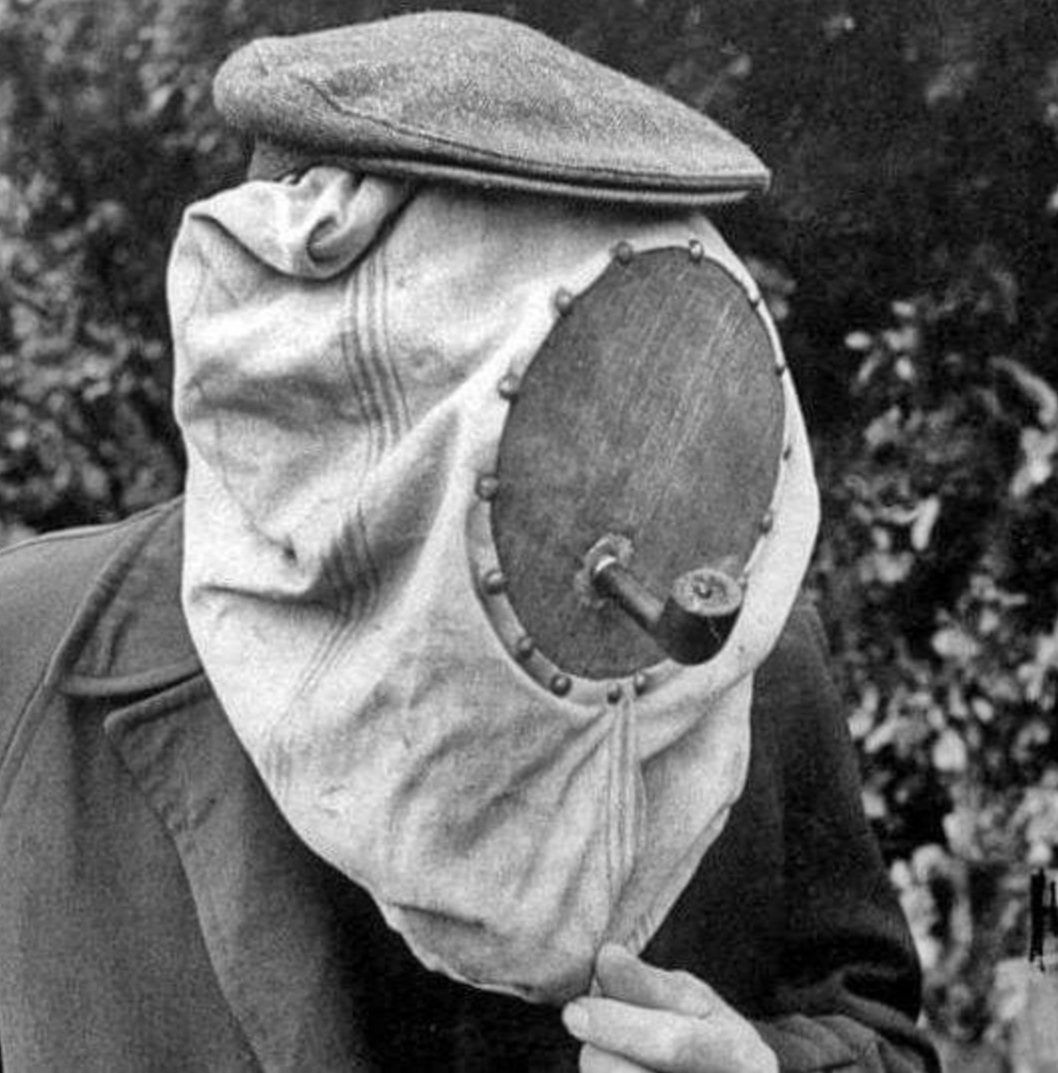
In one of the few surviving photographs of the master, J. Cimrman
demonstrates his invention – a hood for bumblebee keepers (bumblebee breeders) who are die-hard smokers.
Source: Internet
Is it necessary to be afraid of bumblebees?
If you are not allergic, don't be afraid of bumblebees, but respect them.
Bumblebees still have their wings full of work and in most cases you won't have any accidents unless they feel threatened.
Over time, you will learn to recognize when they are okay and when it is better to leave them alone.
When will bumblebees defend their nest?
This depends primarily on the stage of development of the nest and how you treat them .
If there is only the queen bee in the nest, she will not attack you on her own. However, we do not recommend that you look into the nest at that time.
The nest is particularly nervous when new queens appear and when the nest is in the competitive phase . At this time, individual workers may attack intruders. The nest is also nervous before a storm.
If the nest feels threatened by your interference/peeping, or attacks from other bumblebees/bees, it will become nervous. In this case, some of the workers may attack you if you are nearby.
Protective equipment hypnotic bumblebees (Bombus hypnorum)
nest in your hive They are very territorial and guard their nest within a radius of several meters. Individual workers can "come towards you" without any impulse and can fly after you for a long time.
Those beekeepers who have "hypnotic bumblebees" in their hives know this - right? "-)
On the other hand, the sweet-natured field bumblebees (Bombus pascuorum) will enjoy practically anything.
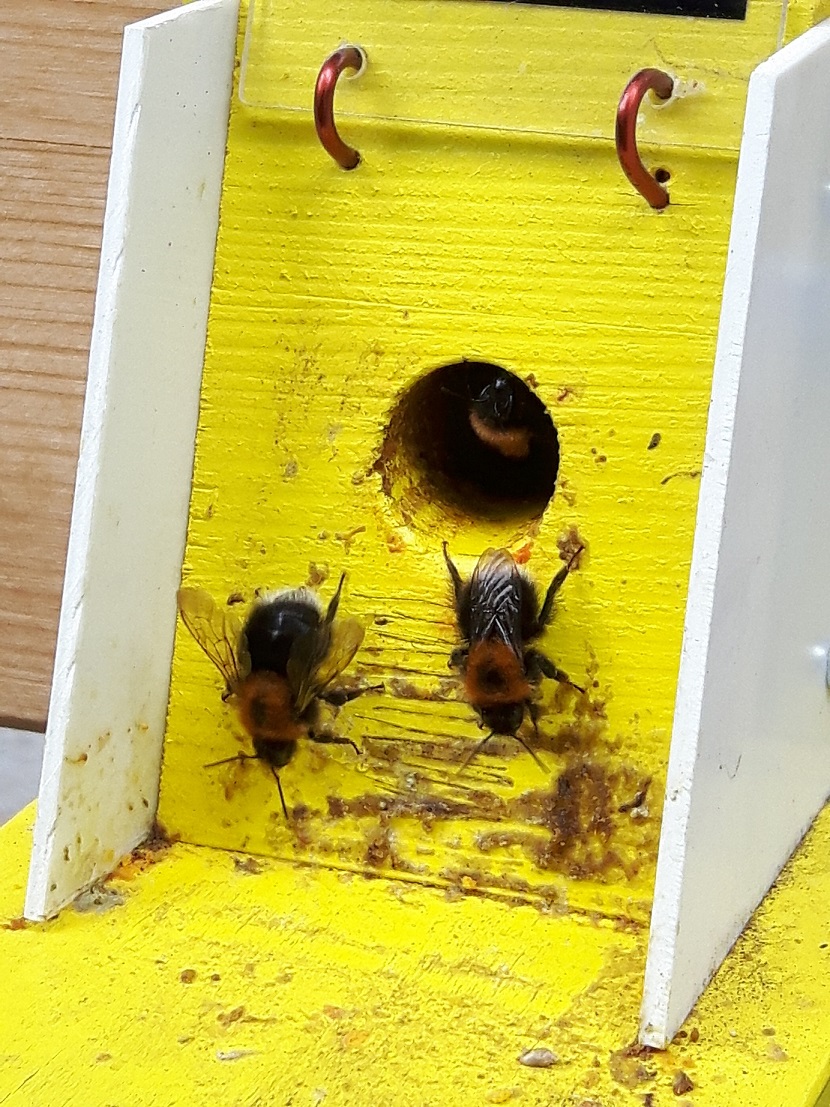
Hypnotic bumblebees (Bombus hypnorum)
Photo O. Hercog
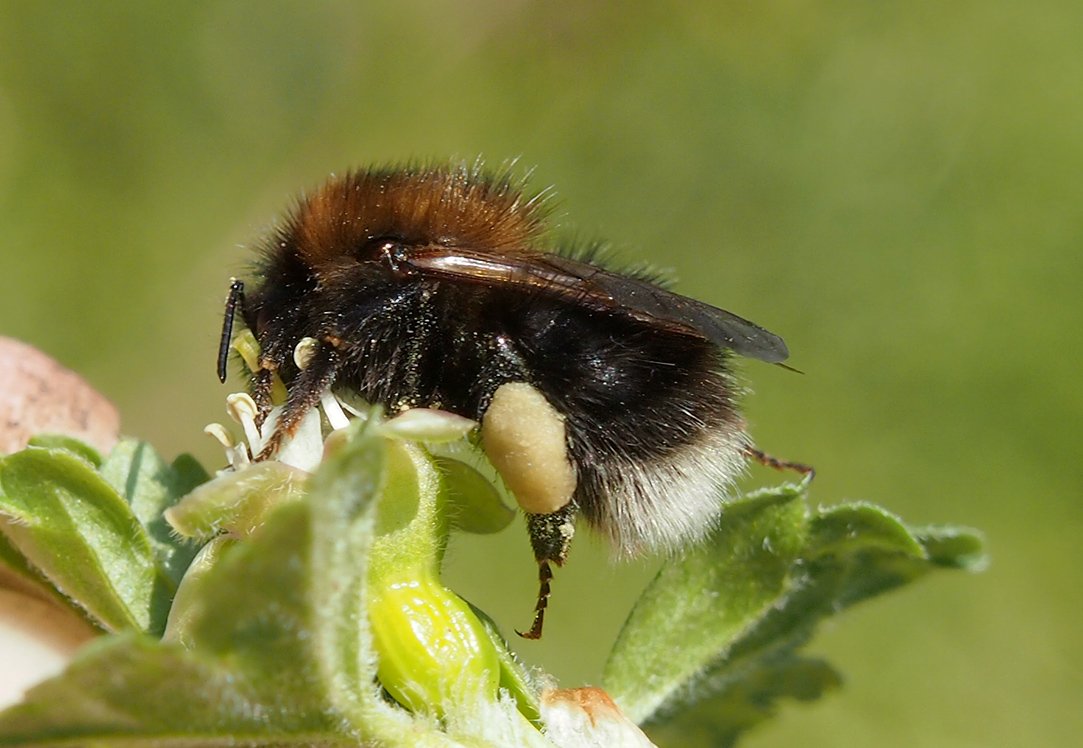
Hypnotic bumblebee (Bombus hypnorum)
Photo H. Kříženecká
.
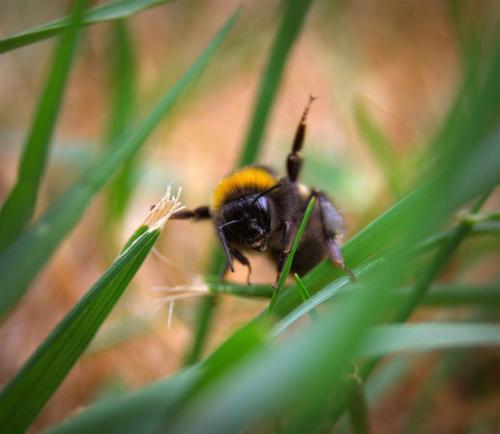
If bumblebees really want to attack you, they will try to sting you in the eyebrows, nose, ears or neck.
instinctively feel where their attacks are most effective . They recognize eyes and accordingly orient themselves to the face and head, similar to wasps and bees. Attacks on the hands are less common, and they attack the legs and torso minimally.
If the bumblebee has time, it will warn you before attacking – gradually raising pairs of legs, then it will come to a position on its back and then the sting...
We will write about the warning and also about the bumblebee sting and will dedicate a special section of Mr. Doctor to it.

Bumblebee in threatening position
Photo Nik Sargnet
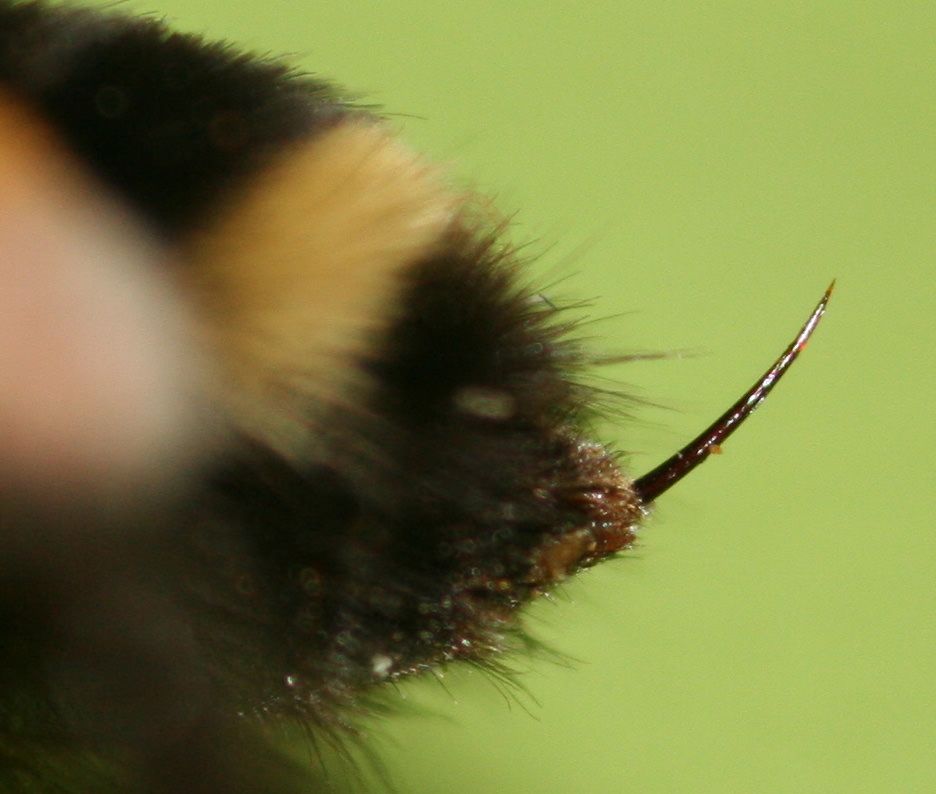
Bumblebee sting
Photo by Dan Greenwood
So should we be afraid?
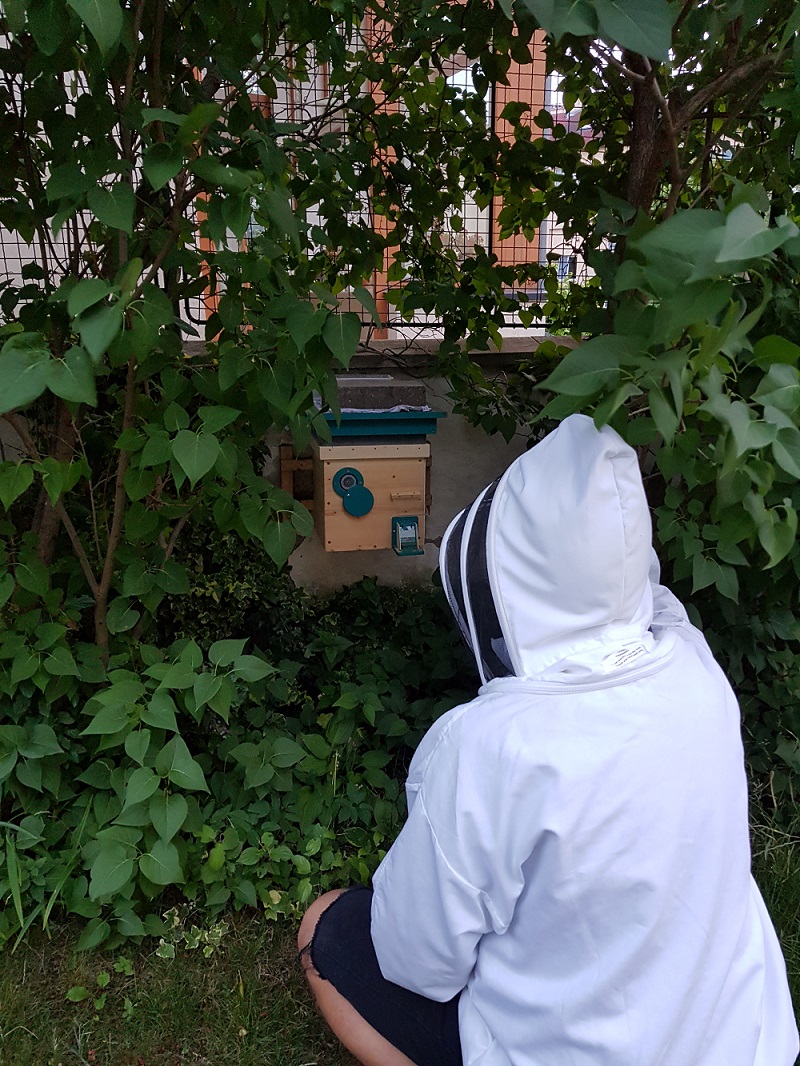
We don't want to scare you, because bumblebees are completely peaceful . However, if you are a beginner beekeeper or want to observe them up close, it is better to protect yourself preventively . Then you will not be afraid of bumblebees, you will be able to sit with them without risk, and when you need to open the hive (see bumblebee care), you will do it without fear and take care of your pets.
If you provide your little ones with a hood , you won't have to worry about them either. Thanks to this, you will all enjoy observing the life of bumblebees to the fullest.

A bumblebee (Bombus hypnoprum) observed by an experienced beekeeper
Photo O. Hercog
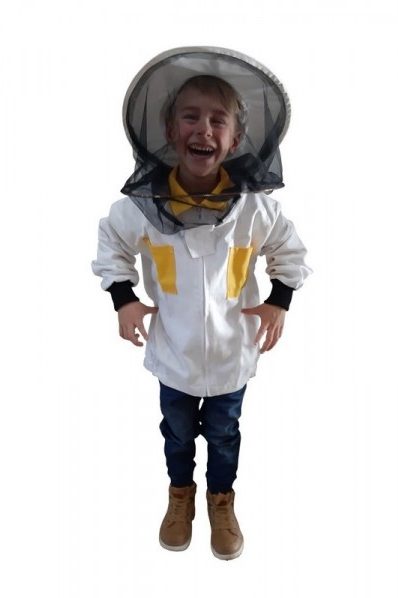
Protective overalls for a small bumblebee breeder/observer
Foto Internet
What tools should I buy?
You can get protective equipment at beekeeping supply stores . Try them on to make sure you feel comfortable.
We highly recommend:
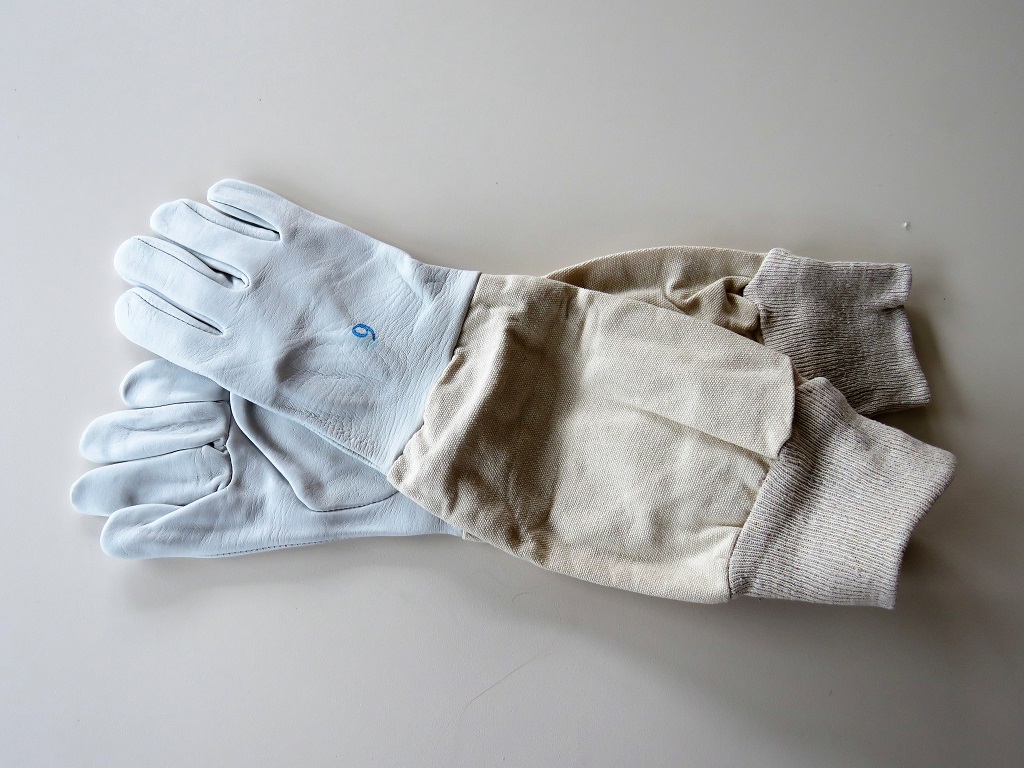
1. Beekeeping gloves made of fine leather with long sleeves. Cloth gloves or gloves made of thick leather are not suitable
2. Beekeeping hat/balcony. The net from the curtain alone is not enough, the net must not touch the skin of the face/head
We recommend:
3. Beekeeping jacket (jacket-hood-sleeves), alternatively a thick flannel shirt
4. Long, thicker pants (jeans)
If we want to have luxury:
5. Beekeeper's overalls
A recommendation that you might laugh at (but only until you gain your own experience)
- Once you have purchased your protective equipment, put it on and seal it well.
- Your family or neighbors will have a really good time if you have a bumblebee hiding in a cocoon and "run" around the garden with it. Are you laughing? Well, we'll see - "the blue ones already know". "-)
- If you use a thick flannel shirt, remember to button the collar and sleeves

Protective gloves of a bumblebee breeder
Photo Internet
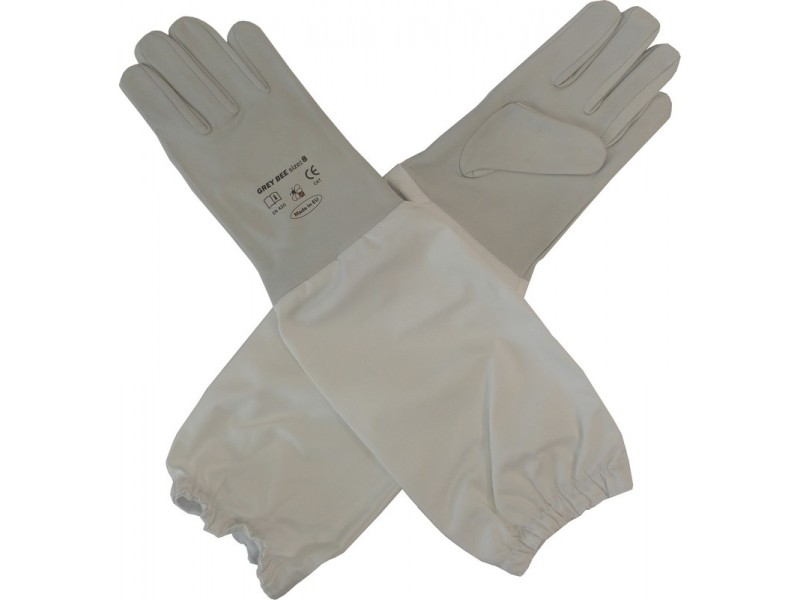
Protective gloves of a bumblebee breeder
Photo Internet
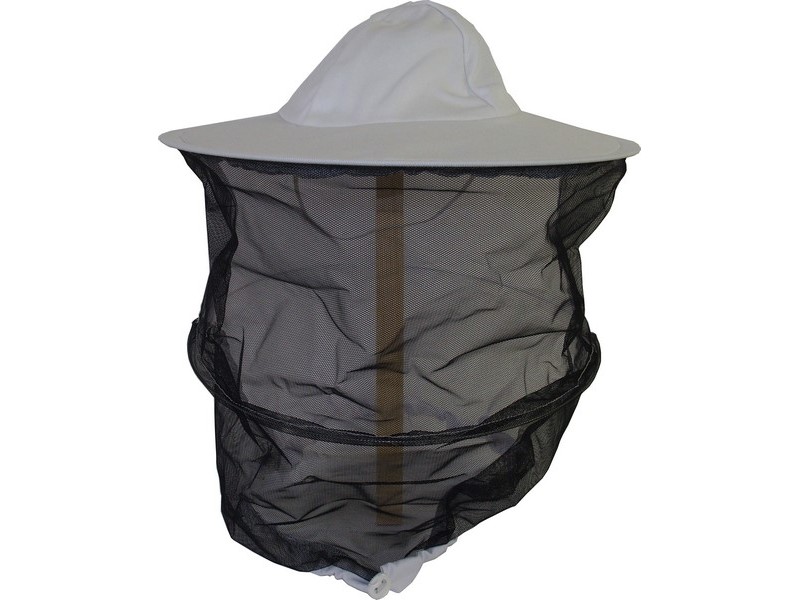
Bumblebee breeder's protective hat
Photo Internet
.
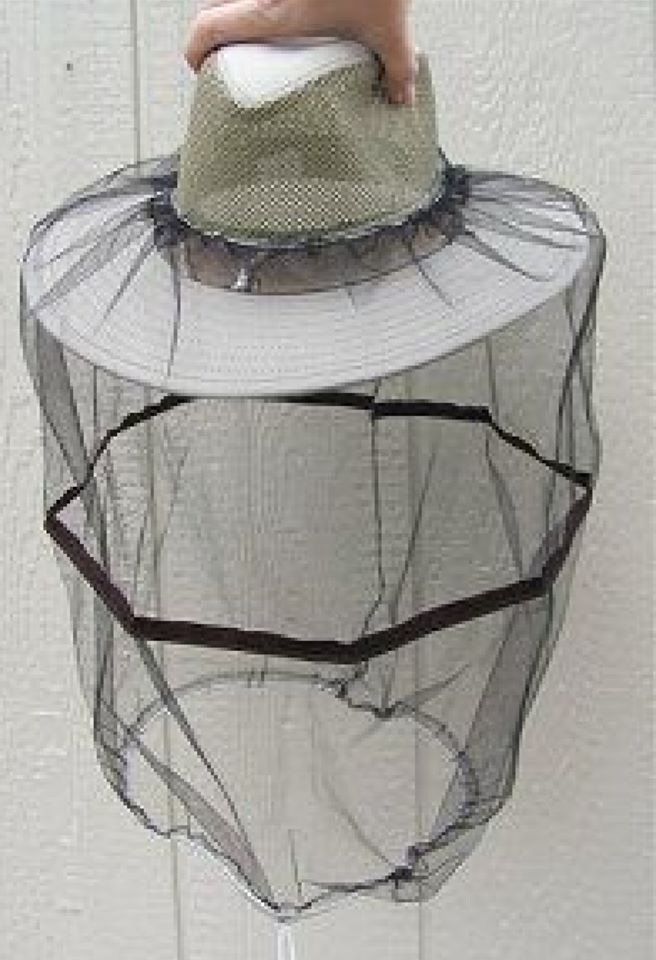
Bumblebee breeder's protective hat
Photo Internet
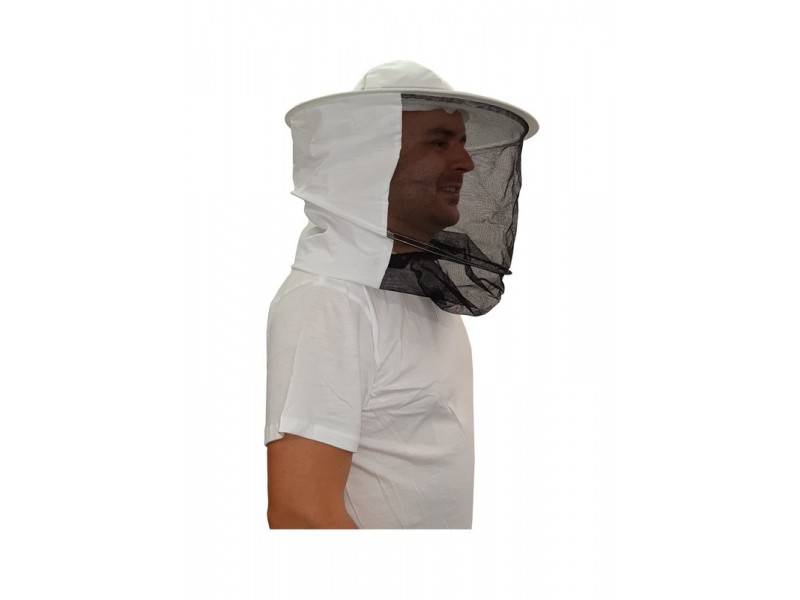
Bumblebee breeder's protective hat
Photo Internet
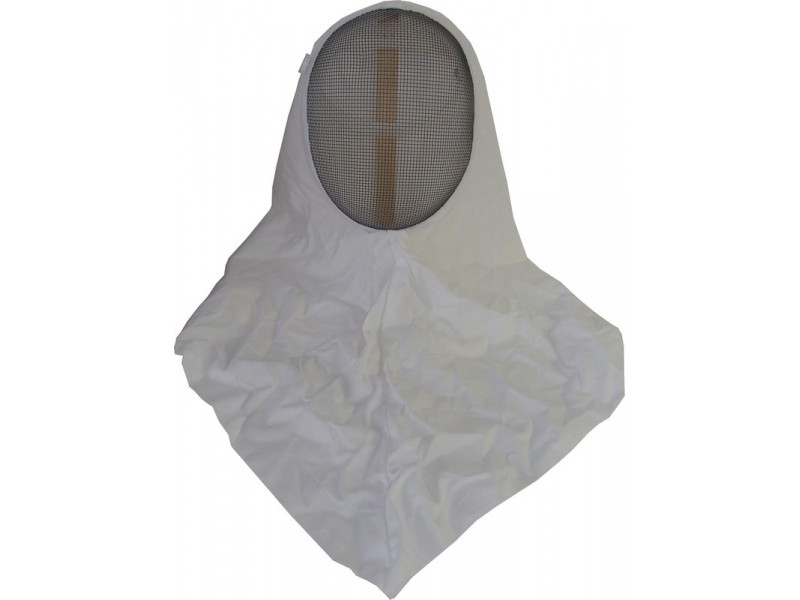
Protective hood of a bumblebee breeder
Photo Internet
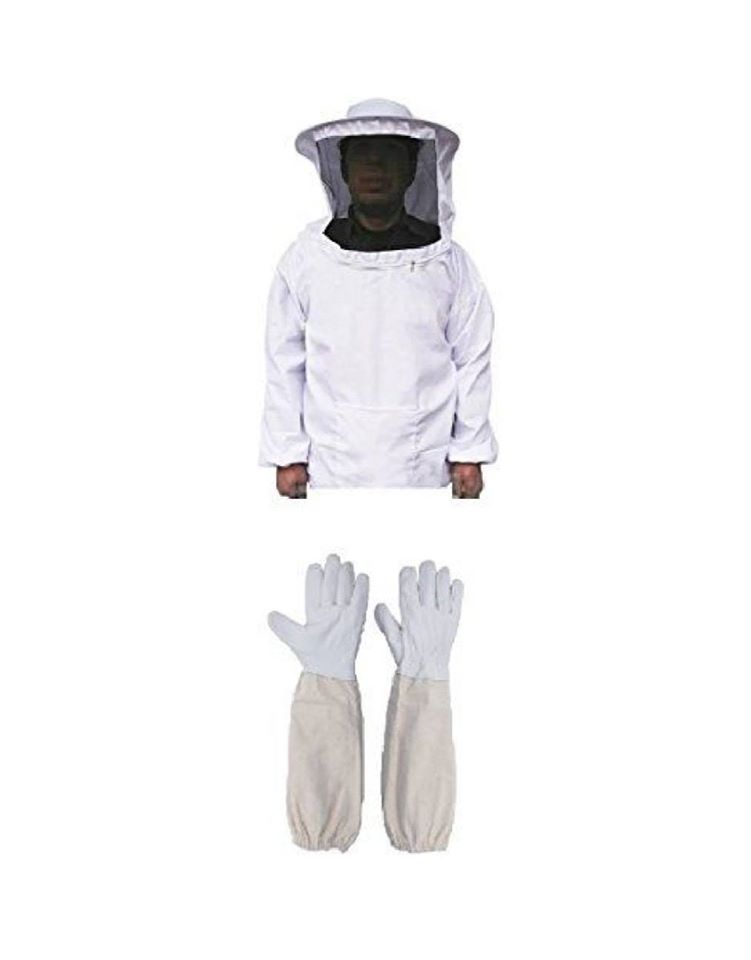
Bumblebee breeder's protective jacket
Photo Internet

Protective overalls of a "stylish" bumblebee breeder 🙂
Photo Internet
.
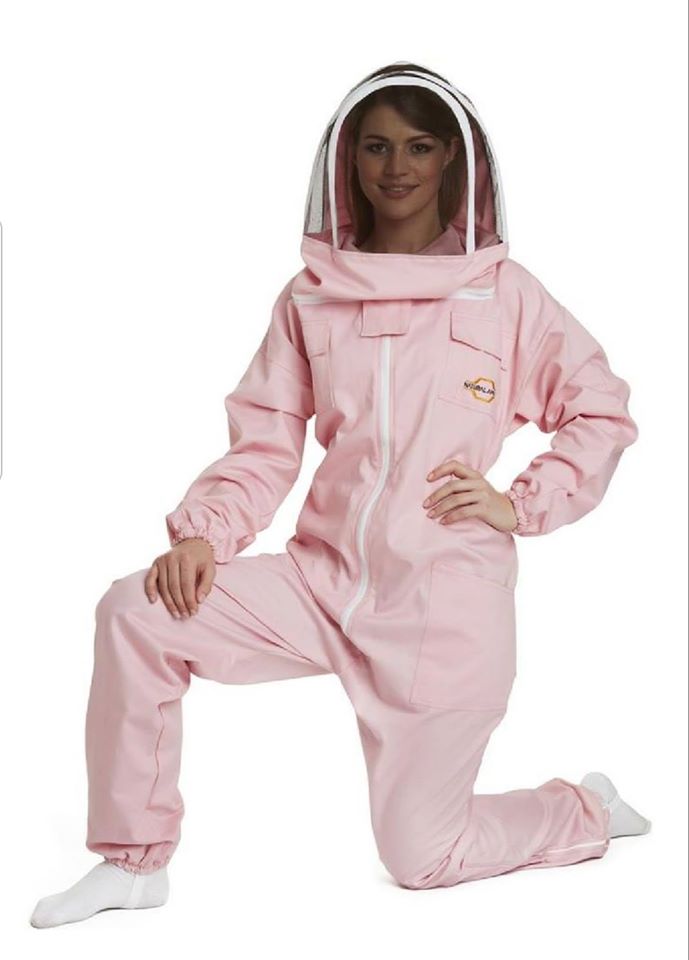
Protective overalls of a "stylish" bumblebee breeder 🙂
Photo Internet

Protective overalls
of a bumblebee breeder 🙂
Photo Internet
When observing bumblebees, it pays to use a beekeeping hood ...
We recommend cleaning up the nest of this species of bumblebees where they will not be disturbed and everything will be ok.
Other species of bumblebees are much more tolerant.
Respirator
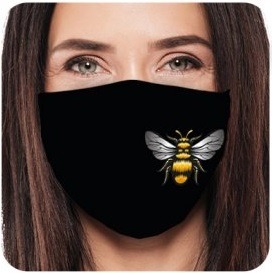
Even though we are literally fed up with respirators and don't even want to see them, we still recommend them.
Bumblebees react to human breath (the breath of mammals). They take it as a signal to defend the nest.
If you are going to be checking or interfering with nests, it is better to muffle your breath, for example with a respirator . You can do it without one, but try it yourself and you will see the difference .
what it looks like when you blow directly into a nest . Don't worry, bumblebees don't normally react like this, it was just a demonstration.

Respirator
Photo: Manufacturer

Respirator
Photo: Manufacturer
Tweezers
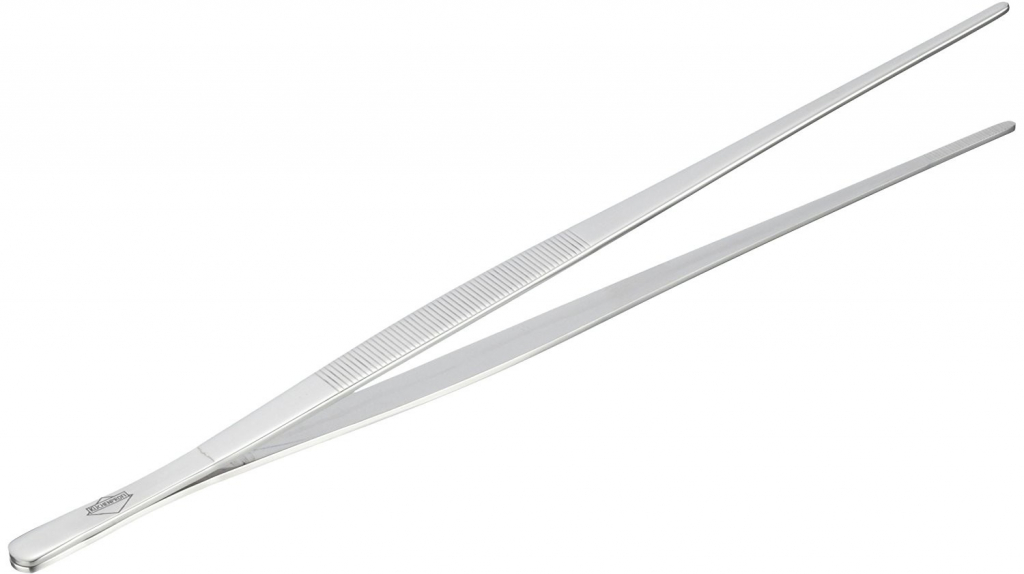
To work with bumblebees, you need at least one long pair of tweezers (preferably 30cm), or one shorter one.
Thanks to the long tweezers, you can reach the bottom of the nest and not have to work there by hand.
Thanks to the small tweezers, you can work easily and gently, which is sometimes not possible with long tweezers.
What do you need tweezers for?
Long tweezers are useful, for example, when you need to pick up a parasite larva from the bottom of the hive, or when you want to insert a PET bottle cap with collected pollen into the nest.
Thanks to the small tweezers, you can then work on the surface of the nest, for example when cleaning the waxwork (nest construction).
With a little practice, you can safely catch a bumblebee on a lining or in a nest with tweezers. If you look at the work of experts in Troubsko, you can see how they can safely collect an entire bumblebee nest with long tweezers. However, for catching bumblebees in a nest and on a lining, we recommend using a so-called trap . This is much safer for you and for the bumblebees.
Where can I buy tweezers?
You can find suitable tweezers in stores selling utensils and similar supplies.
Meat roasting tweezers have proven to be effective – they are long and of high quality. However, you can find more on the Internet – choose for yourself.
How to choose tweezers?
Get a pair of stainless steel thin tweezers with a straight/curved end. Pointed tweezers are better than wide ones.
The tweezers should be very soft, because if you want to grab a bumblebee with tweezers, you need to have feeling in your hand.
When you're choosing tweezers in the store, try them out and choose the softest one .
What tweezers are not suitable?
Wide tweezers are definitely not suitable because you won't be able to grab a small object with them.
Wooden tweezers (cucumber tongs) are also not suitable.
Recommendation
- Practice working with tweezers while wearing beekeeping gloves before placing the hive in place - this will give you the necessary practice and peace of mind.
- You need practice to prevent the tweezers from falling into the nest while you are working. The waxy structure of the nest is fragile and the tweezers would damage it.
- Exercise is necessary – you know what the famous bumblebee breeder Alexander Vasilyevich Suvorov said: “Hard on the training ground, easy on the battlefield..” 🙂

Bumblebee breeder's long tweezers
Photo Internet
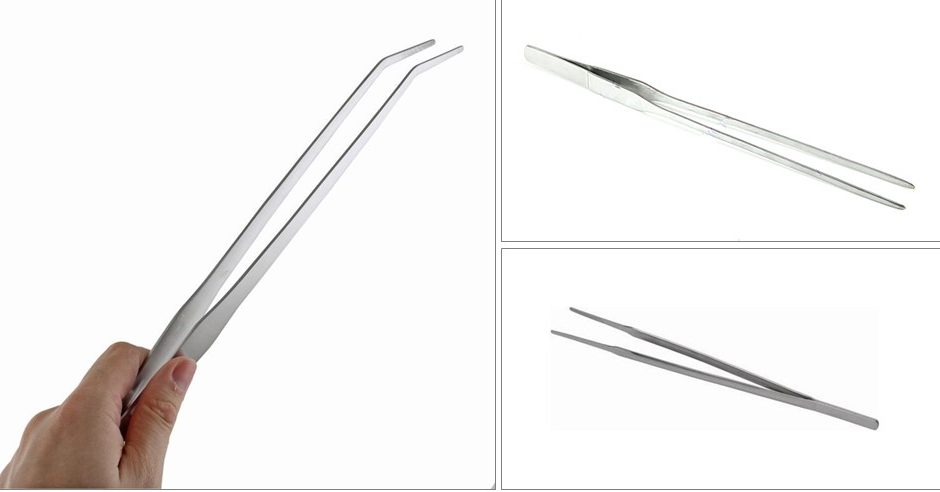
Bumblebee breeder's long tweezers
Photo Internet
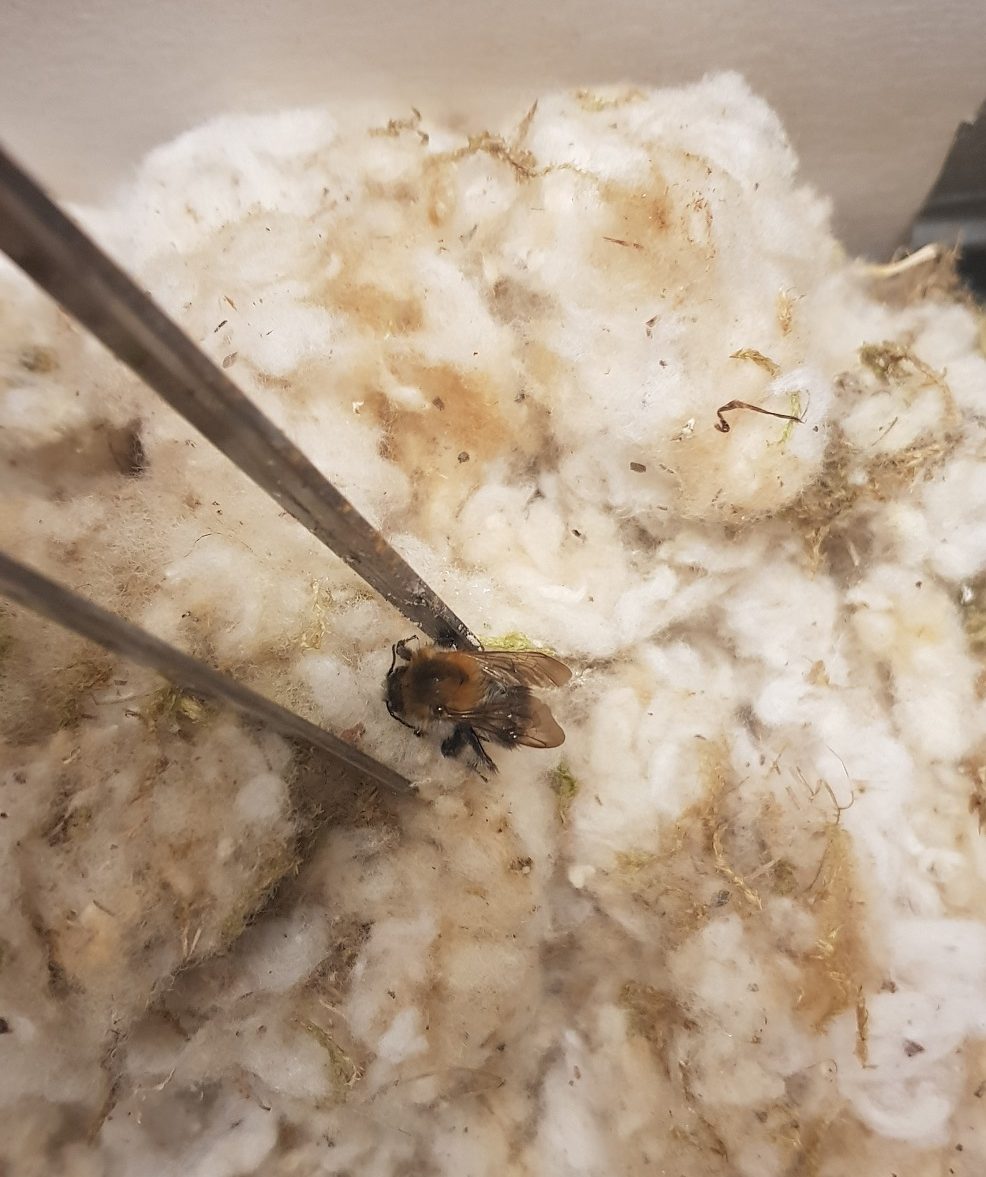
Tweezers – careful grasping of a worker bee (bumblebee)
Photo O. Hercog
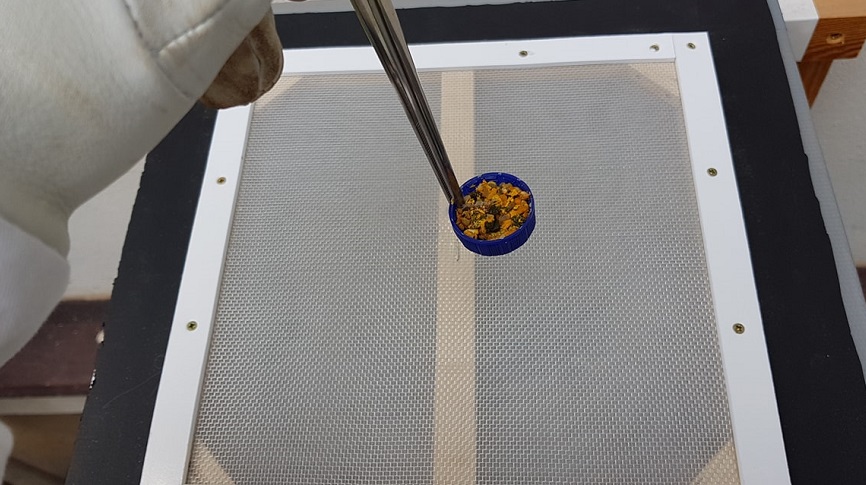
Tweezers – depositing pollen into the nest
Photo O. Hercog
Beekeeping gadget
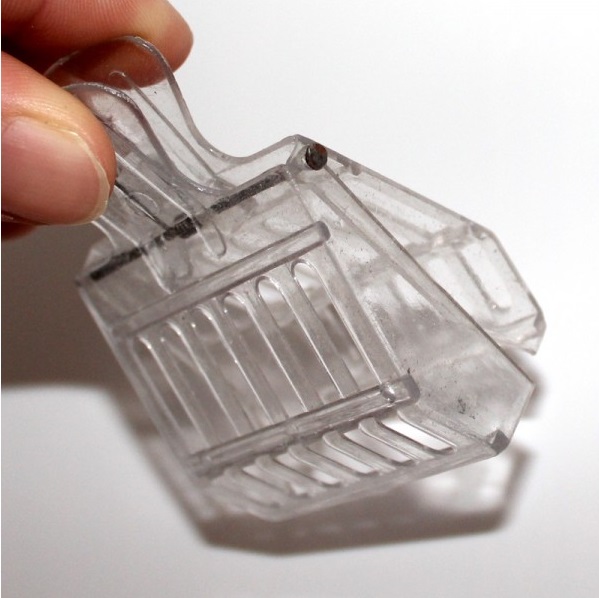
A gadget is a small, inconspicuous, but at the same time very useful tool. Beekeepers use a gadget and they know why – a gadget is simply a gadget!
They are essentially pliers with a space where the bumblebee/bee will be trapped. The pliers are shaped so that they do not hurt the insect when they are trapped.
What is the purpose of the catch?
You will need the device when you need to gently remove an individual sitting bumblebee. You will also need the device when you want to remove all the bumblebees in a nest and carry out an inspection/intervention.
But you can also use the device when a bumblebee or other insect gets stuck outside your window at home - you can easily remove it and release it. It's much better than laboriously catching insects outside the window in a cup, closing it, and then carrying them around.
Where can I get the gadget?
All beekeeping stores have the device. The price ranges from about 30 CZK for a plastic one and 80 CZK for a metal one. The plastic one will last for several seasons.
Is there an alternative to the catch?
Certainly yes. There are solutions such as a safe insect catcher . You will pay more than 250 CZK for it. It is good at catching insects on the window. But it will not replace a beekeeping device - you will not catch a bumblebee in the hive with it.

Beekeeping device – plastic
Foto Internet
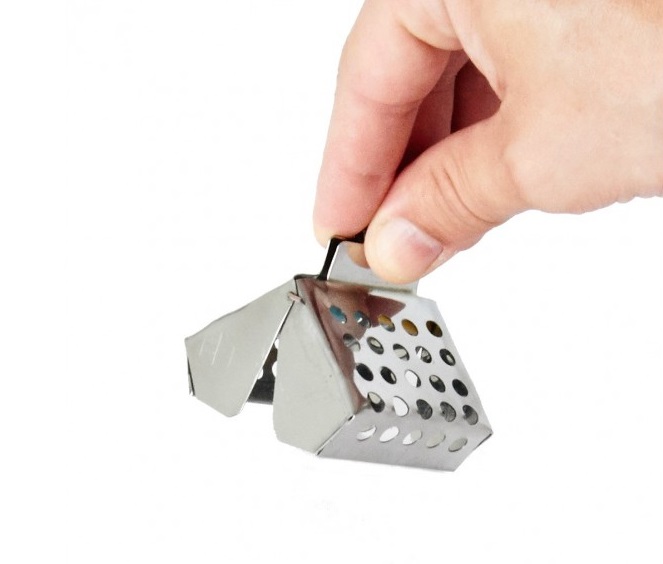
Beekeeping device – metal
Photo Internet
.
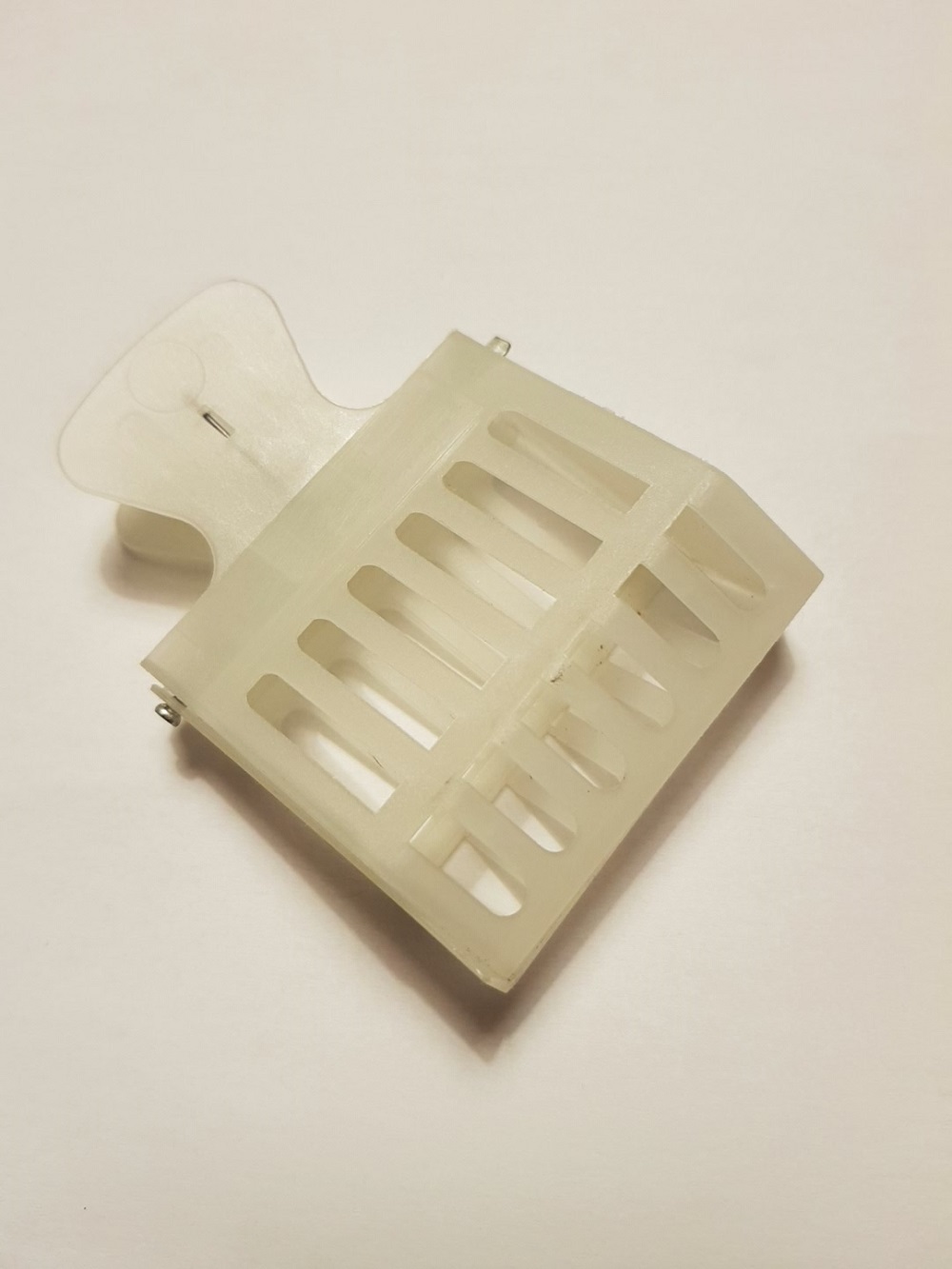
Beekeeping device – plastic
Photo O. Hercog
.
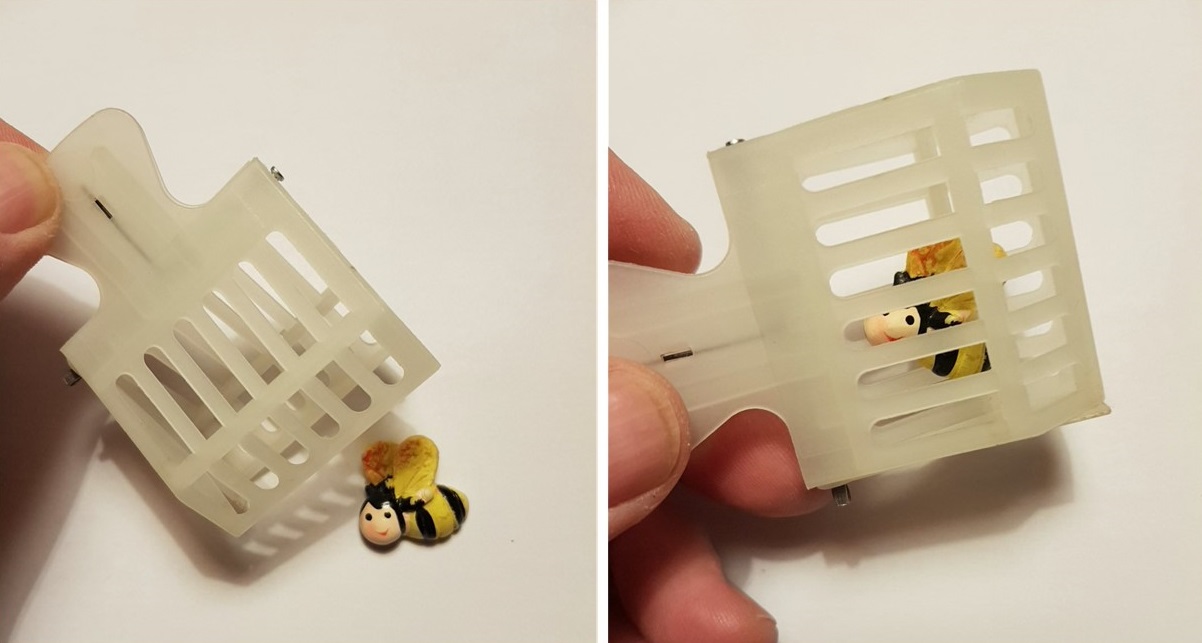
Beekeeping gadget
Photo O. Hercog
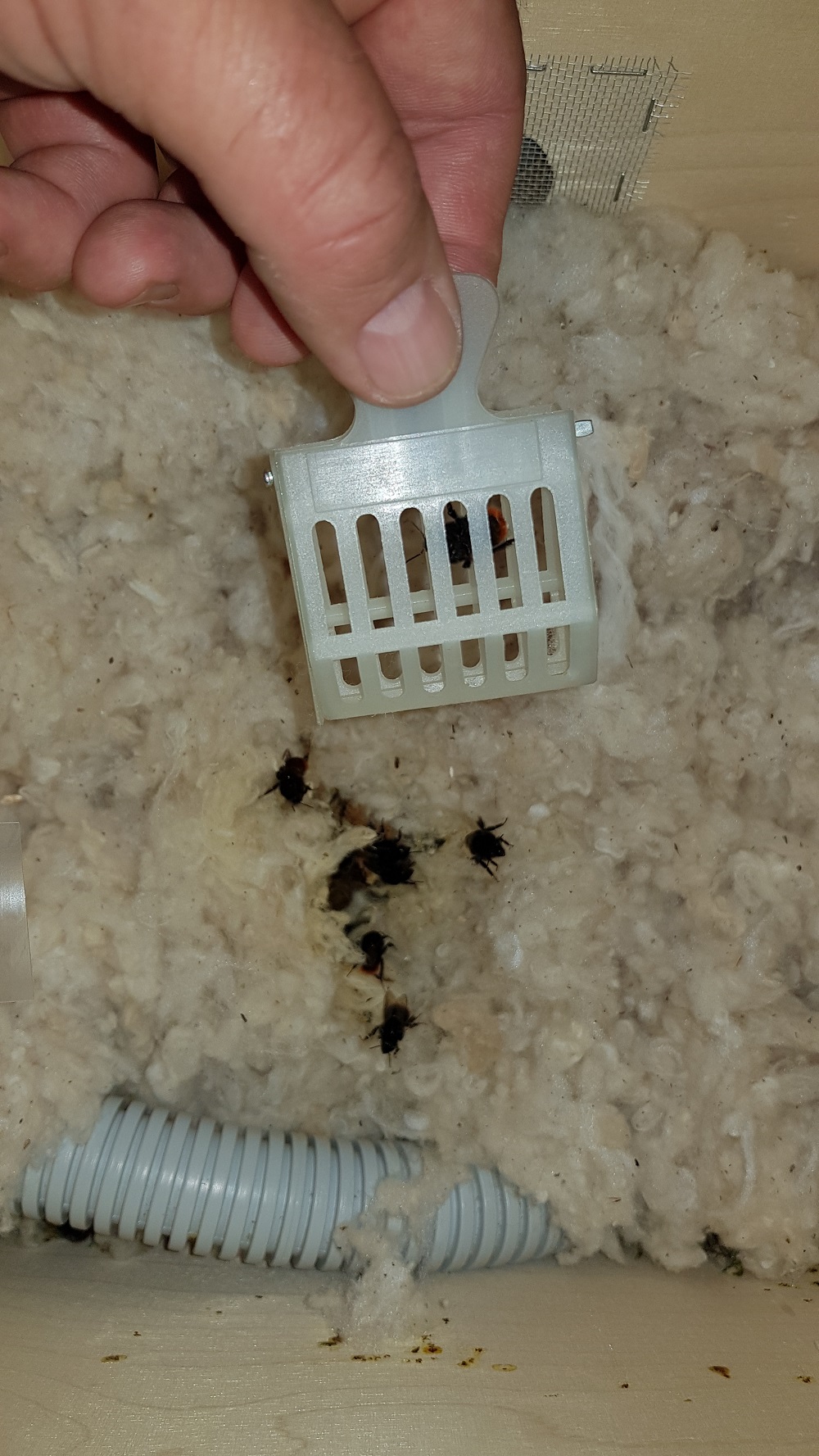
Beekeeping gadget
Photo O. Hercog
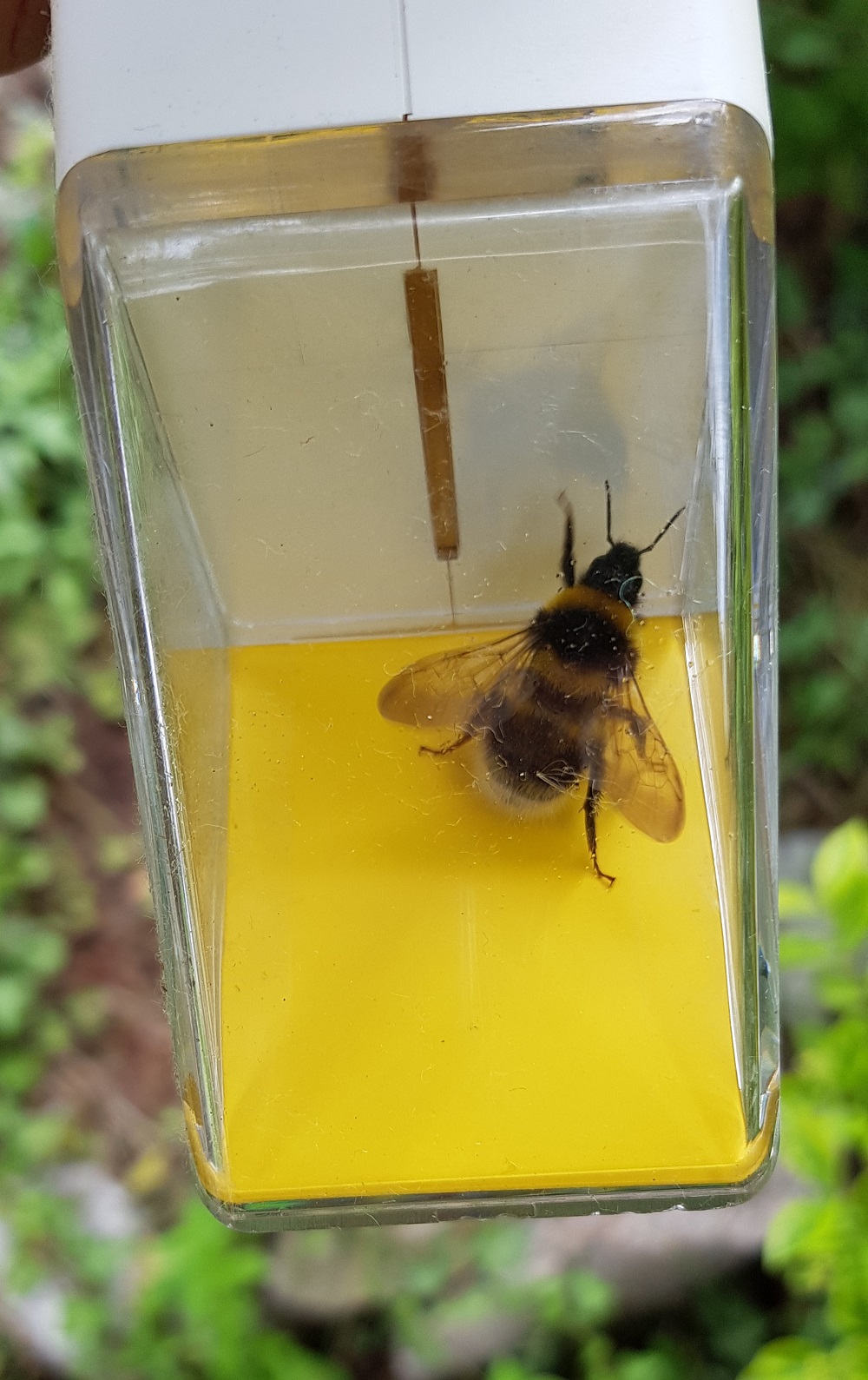
Insect catcher
Garden bumblebee (Bombus hortorum)
Photo O. Hercog
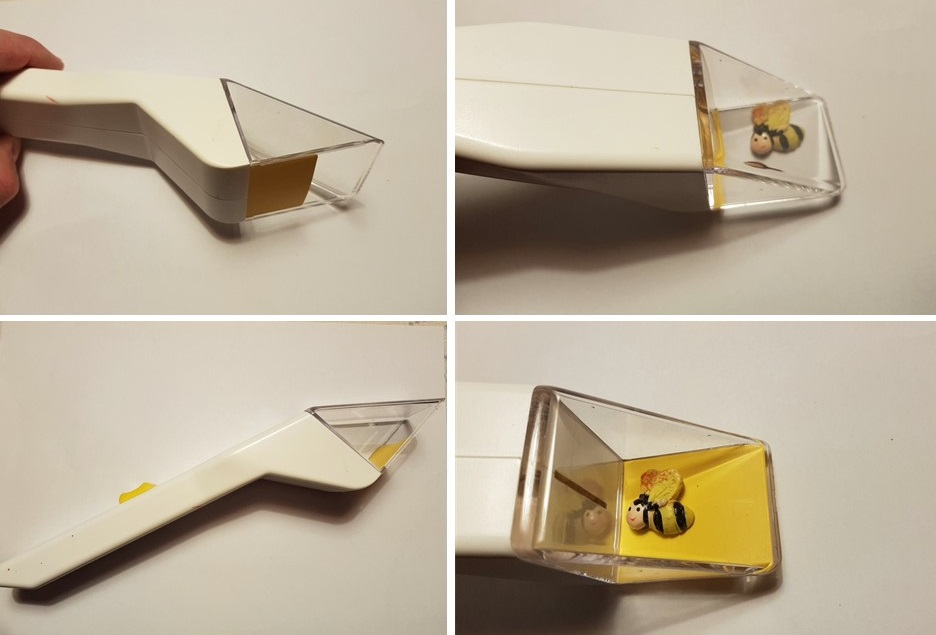
Insect catcher
Photo by O. Hercog
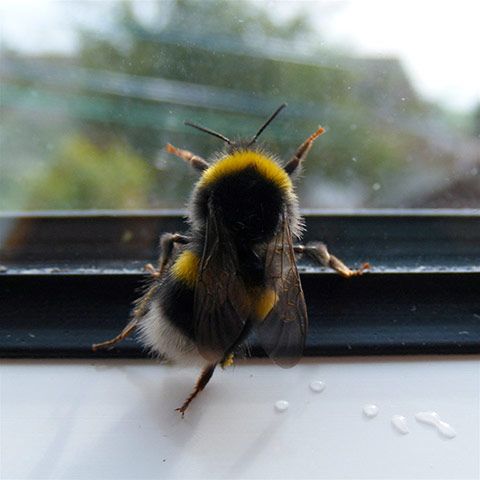
Save me when I'm stuck outside the window!
Photo Internet
Red light
Why the red light?
Bumblebees do not perceive light of the same wavelengths as humans. Most of our species cannot see red light, and if they are in the dark and you shine a dim red light on them, they will not perceive it.
When will you need a red light?
You can use the red light when checking the nest or when you want to observe bumblebees behaving in the dark with the hive closed. You will definitely need the red light when you join the Bumblebee Quick Company.
How to get a red light?
You can use an old light bulb for a photo camera , you can paint the light bulb with red alcohol transparent paints, you can use a lamp with a red filter , etc.
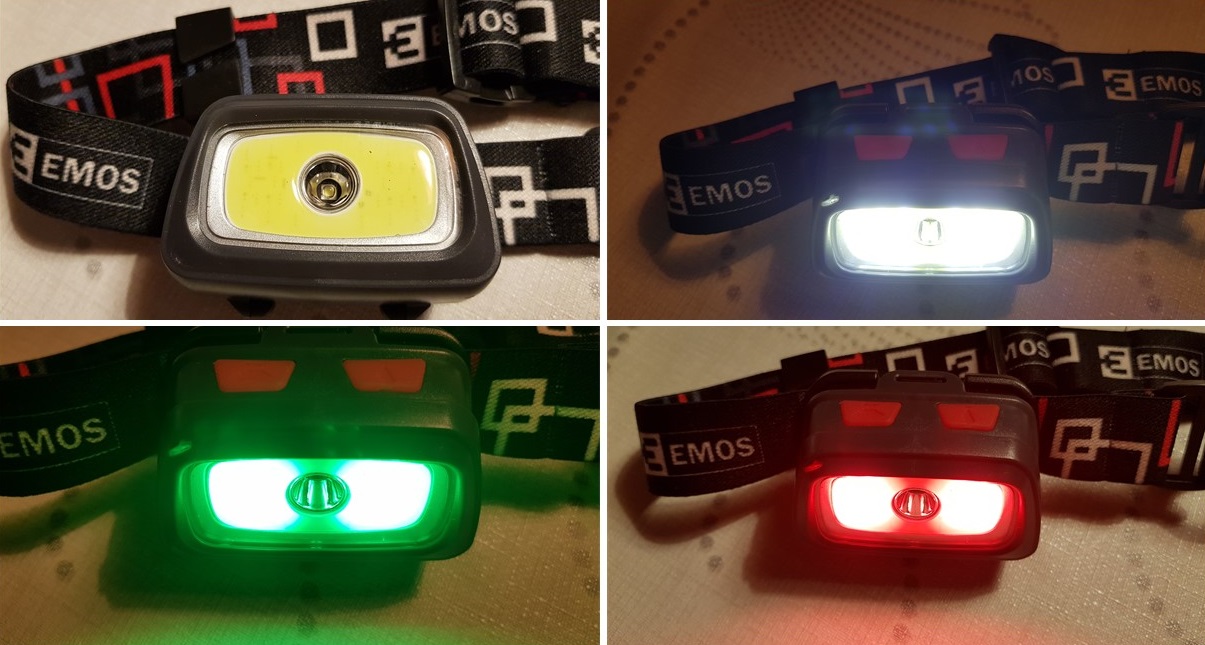
A headlamp with a red light is practical. The best thing to do is to get a headlamp with LEDs that can switch between red and white . You can get one at outdoor stores. It's not cheap, but it's an elegant solution.
In an emergency, you can also use a red bicycle light as a headlamp, or on a holder, for example from an old lamp. There are no limits to your imagination.

Red light – headlamp
Photo O. Hercog

Red light – Bumblebee Rapid Company in action
Photo Ála Ungerová
.
Glass and funnel
What glass should I use?
- Choose a jar/glass vase/container that is taller than regular mason jars – the taller the better (30 cm is sufficient).
- The height is quite important because bumblebees won't be able to climb out of such a container.
- The diameter of a regular canning jar is suitable.
- A glass container is suitable because you can see into it and inspect its contents and perhaps count the "cleaned" bumblebees.
What's the funnel for?
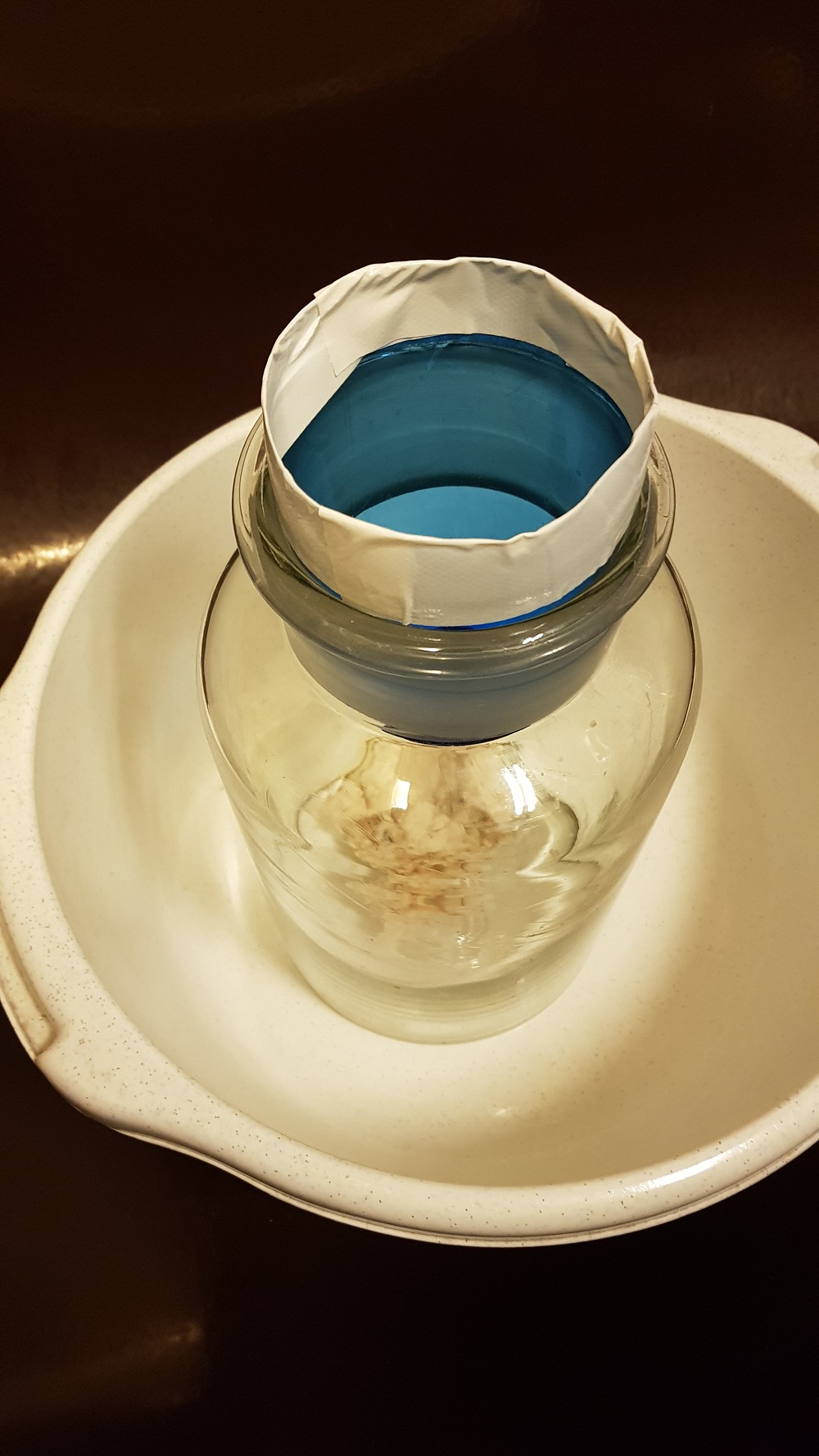
- A funnel is a good trick - you put it in a jar/container. Then if you throw a bumblebee into the funnel, it will fall through the throat and not come out of the jar.
- The only condition is that you use a funnel with a wide neck, or you can make one from the neck of a PET bottle. We do not recommend a smaller diameter neck - it could get clogged with the lining and the bumblebee would not be able to get in.
- If you make a funnel from a PET bottle, cover its edges with adhesive tape to avoid injury.
Recommendation – wash these tools occasionally to avoid spreading infections/parasites between hives
Note: The glass and funnel from the PET bottle are photographed in a working position in the bathtub in a "tub" - we will explain why later 🙂

Funnel made from a PET bottle
Photo O. Hercog
.
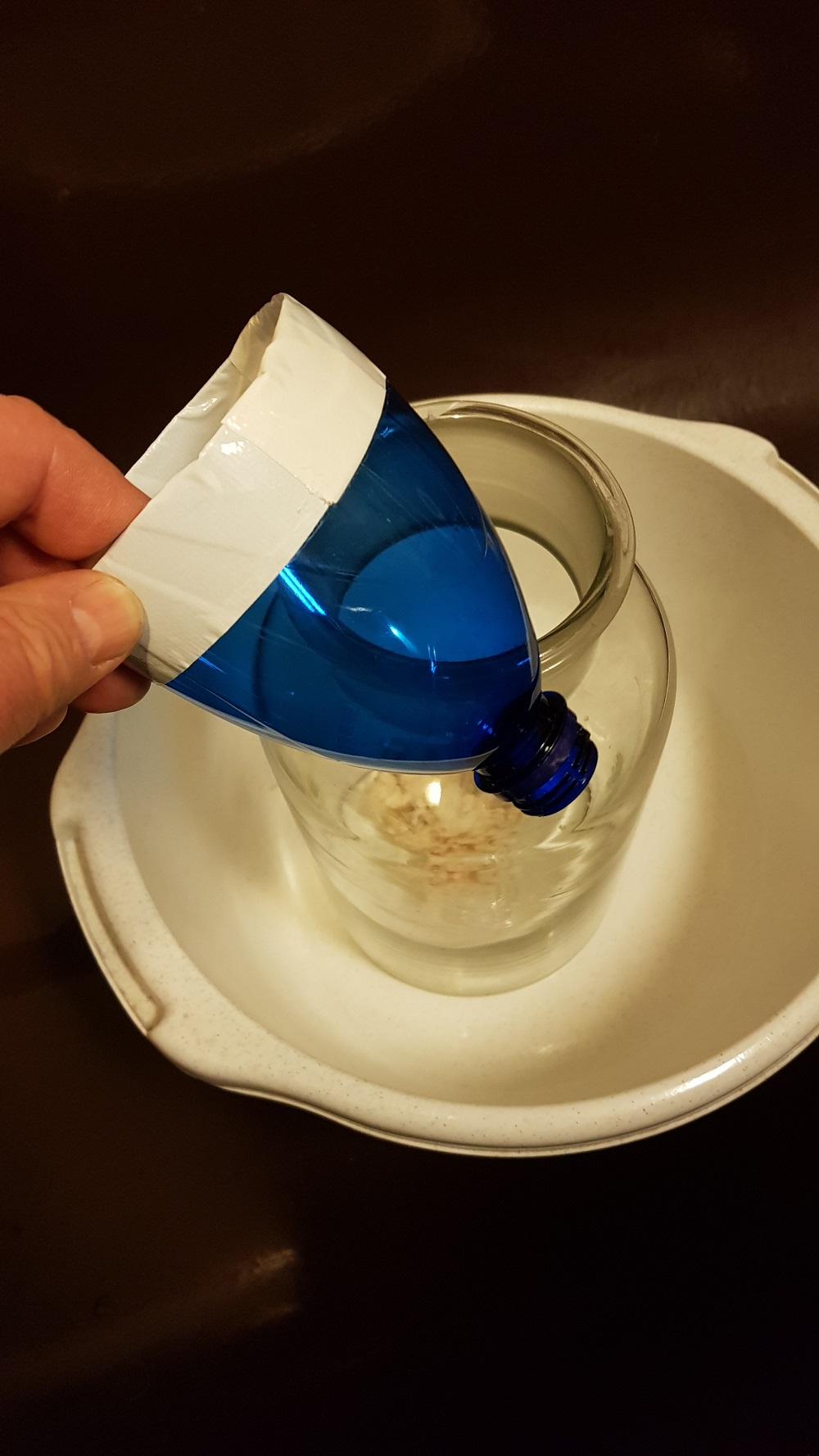
Funnel made from a PET bottle
Photo O. Hercog