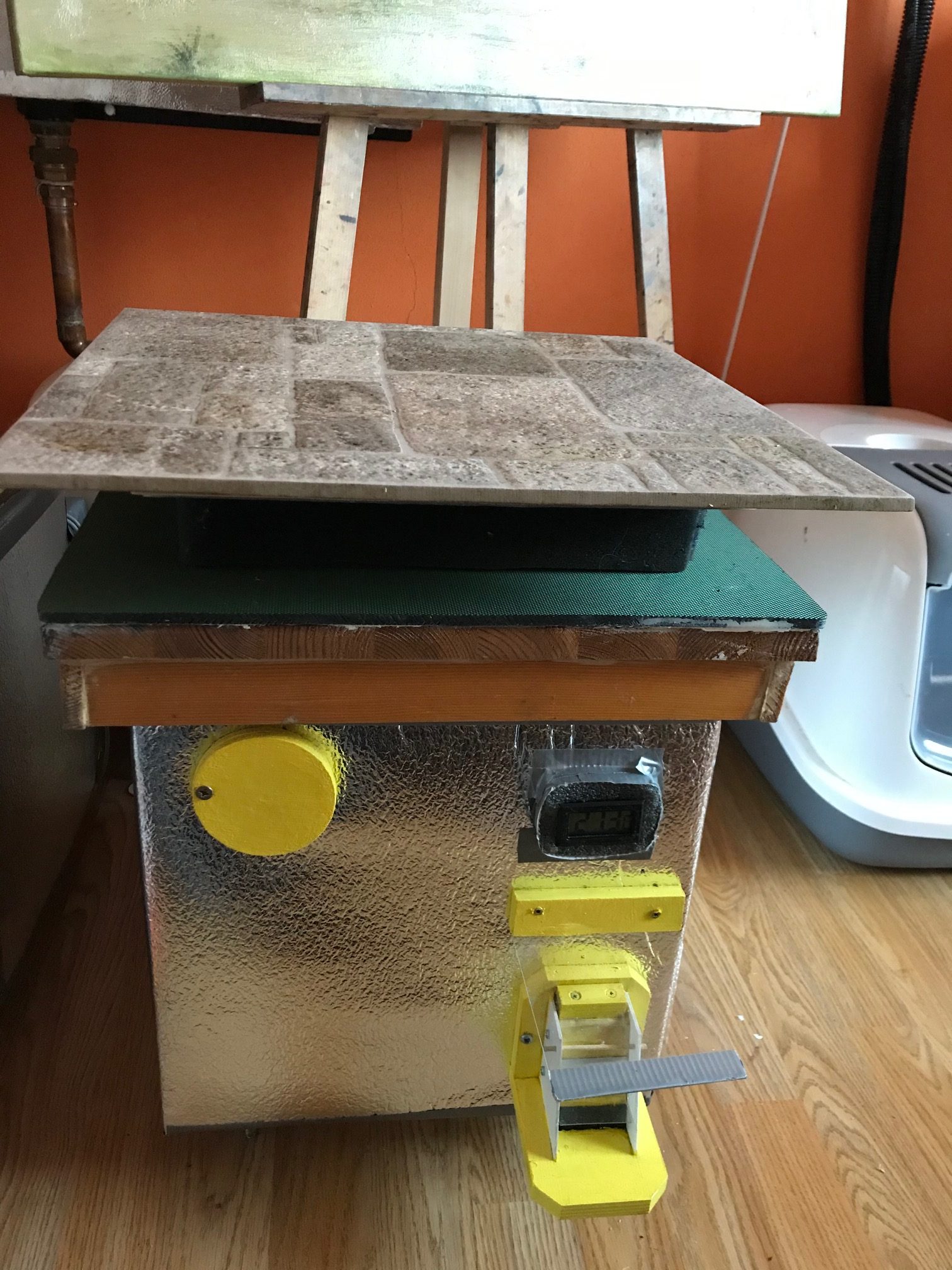
Cooling frame on the roof of the hive

Attachment for cooling the hive on tropical days

COOLING FRAME

Author of the solution (idea): Lenka Vettermannová
Tested in practice: YES since the 2018 season, gradually modified, tested with Čmeláci PLUS
Testing results: verified, safe when following the production recommendations and usage methodology
Group of keepers for whom the tool is suitable: without restrictions
Justification: Protection of the hive from overheating during extreme daytime temperatures


What is a cooling frame?

If air temperatures rise above 30C, it is a good idea to cool the hives for bumblebees

One of the gadgets that Lenka Vettermannová has been using and improving for several years is the smoothing frame.

Essentially, it is an enclosed space filled with cooled material, placed open-sidedly on the roof of the hive. The roof is used to conduct excess heat from the space above the lining into this space. Here, the cooled air cools the contents of the hive.

The solution cools the air above the lining, it does not penetrate significantly into the core of the nest - the lining prevents this.

When using cooling blocks enclosed in an insulated space, a long-term cooling effect is achieved, even throughout the day. However, the condition is that the space is thermally insulated and heat transfer takes place between the hive and the cooling medium.

It is also very important to use a thermometer. It should measure the air temperature above the lining. This will prevent the nest from becoming overheated.


Bumblebees PLUS - Cooling Frame - Lenka Vettermanová

Cooling Frame
Photo: Lenka Vettermanová (6/2021)
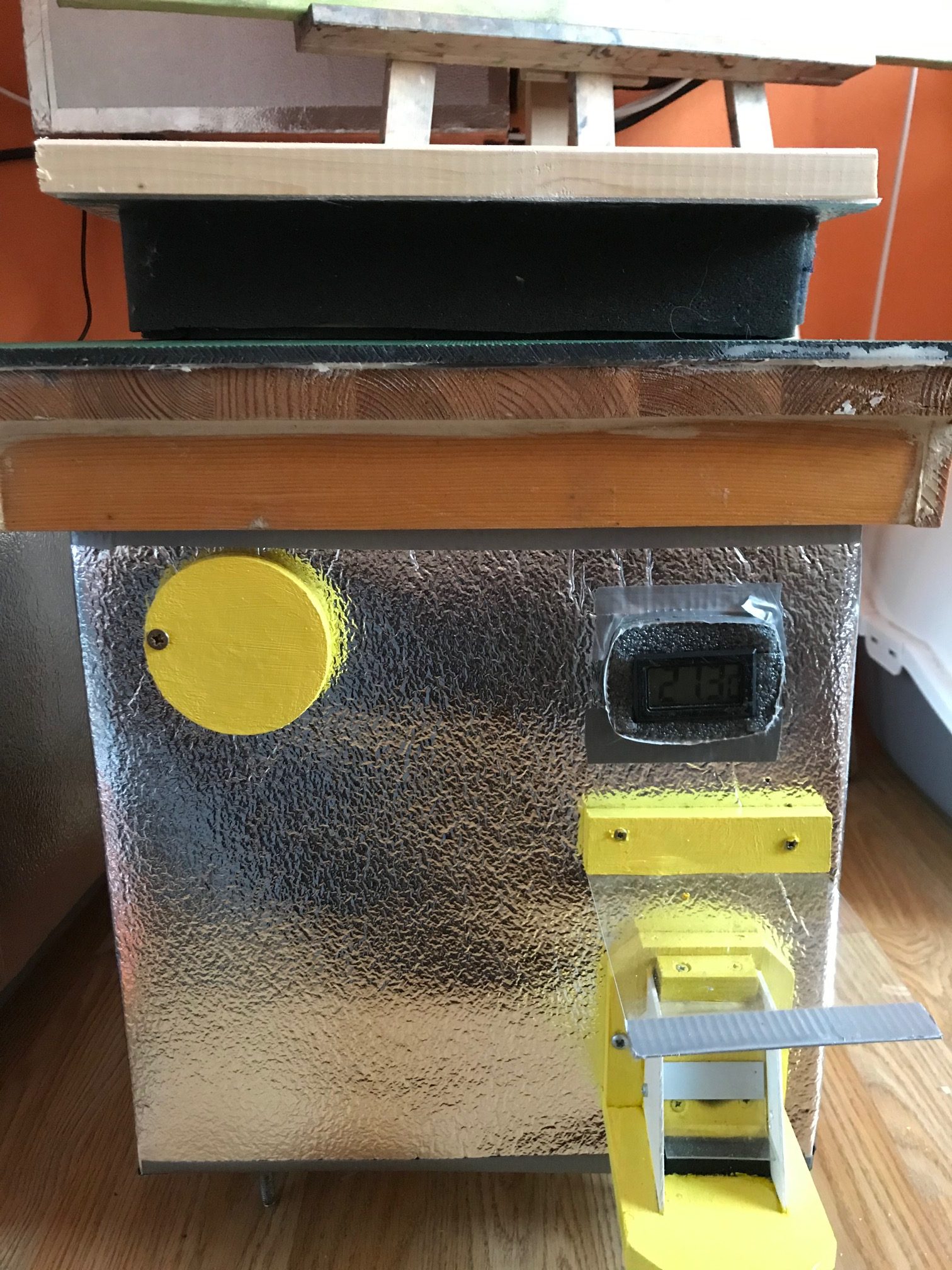
Bumblebees PLUS - Cooling Frame - Lenka Vettermanová

Cooling Frame
Photo: Lenka Vettermanová (6/2021)
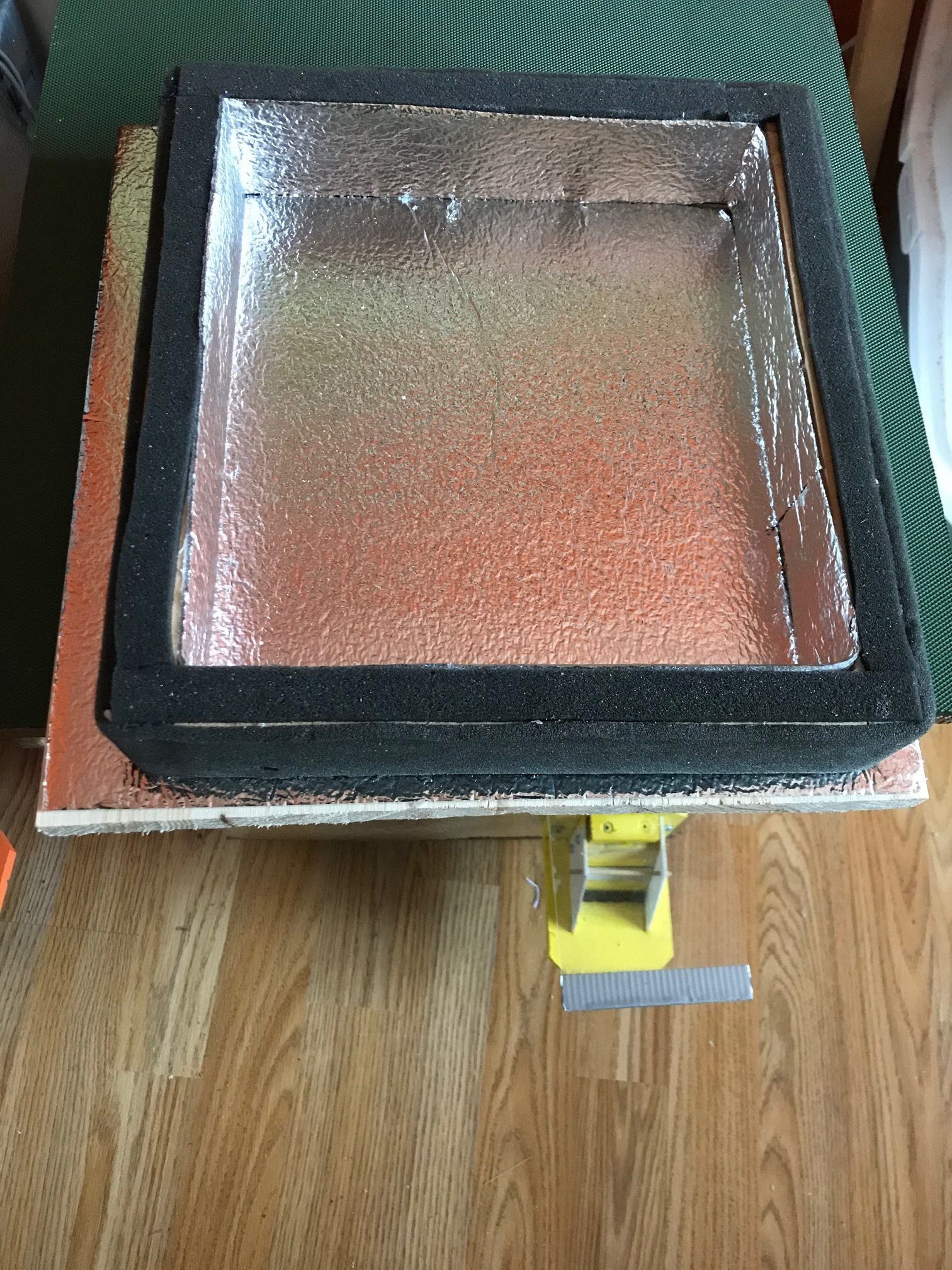
 

Bumblebees PLUS - Cooling Frame - Lenka Vettermanová

Cooling Frame
Photo: Lenka Vettermanová (6/2021)
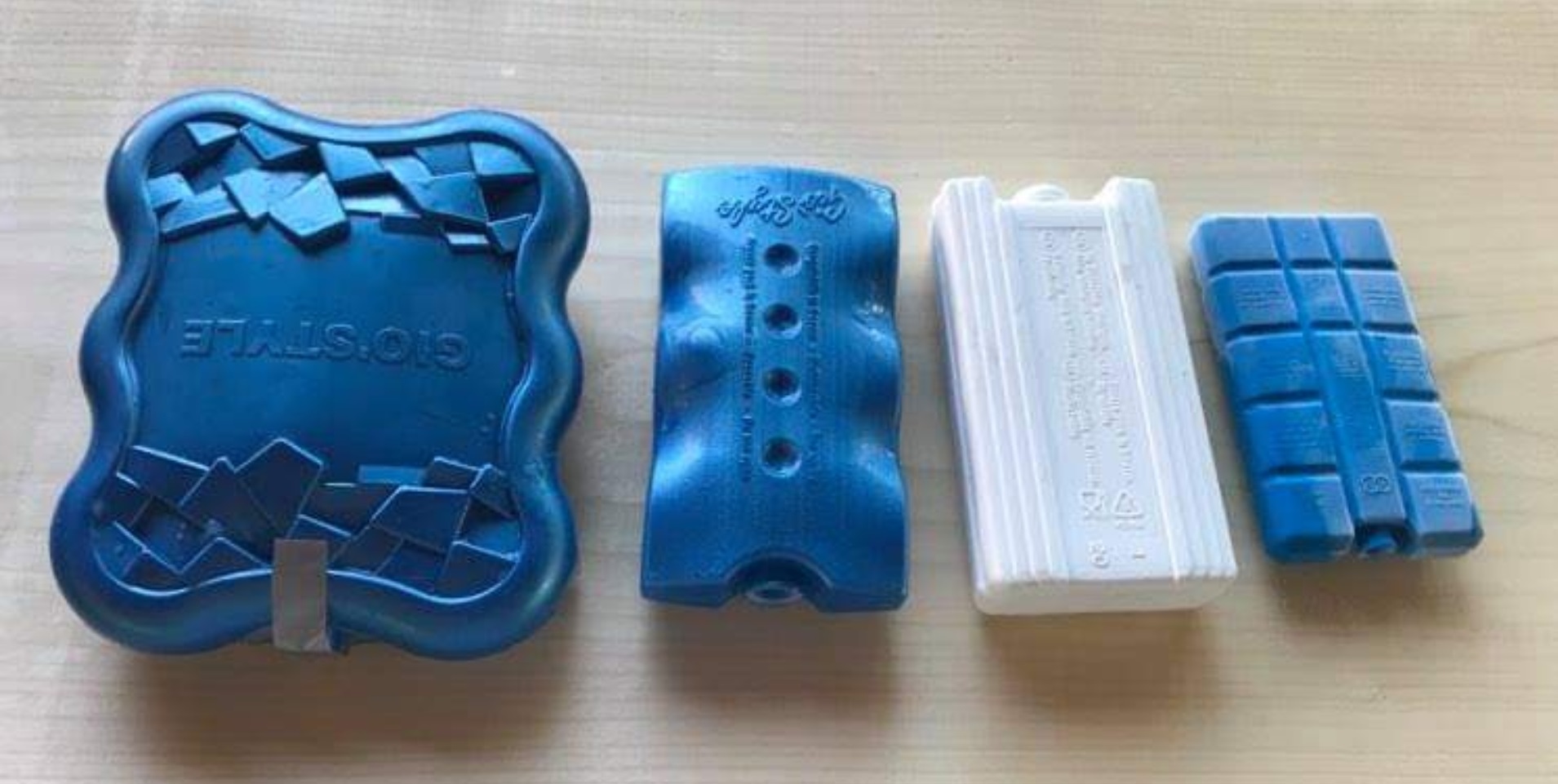
 

Lenka uses various sized commercially available blocks as cooling blocks. Depending on the chosen size (volume), the cooling power and the time for which the cooling is applied can be “controlled”.


If you want to use this option, don't forget to do so when creating the frame.

Bumblebees PLUS - Cooling block

Cooling blocks of various sizes
Photo Lenka Vettermannová

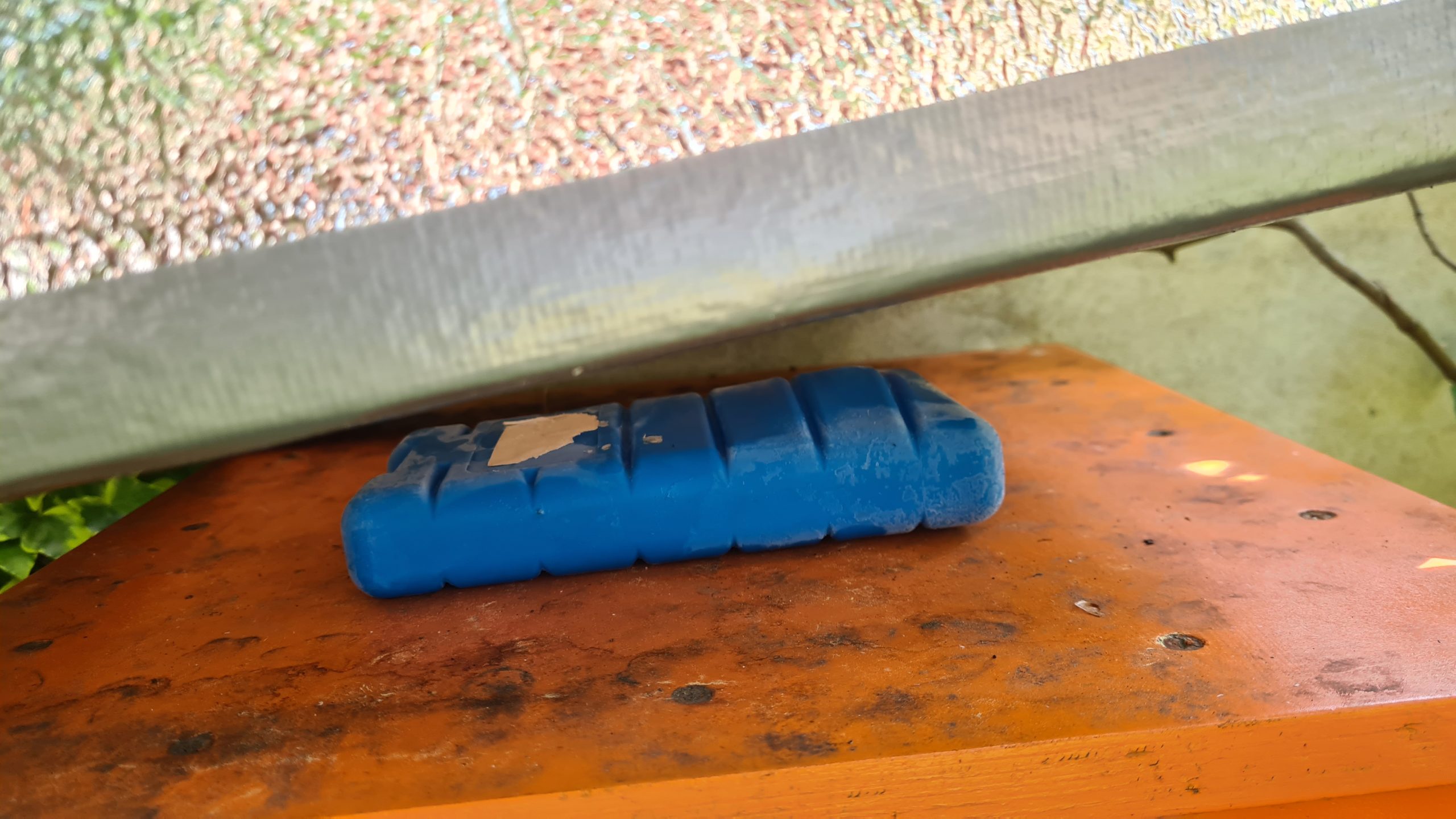
An example of how a cooling block can deform.
So if you are going to make a cooling frame, adjust its dimensions so that the block can fit in this situation and its height is double when removed from the freezer.
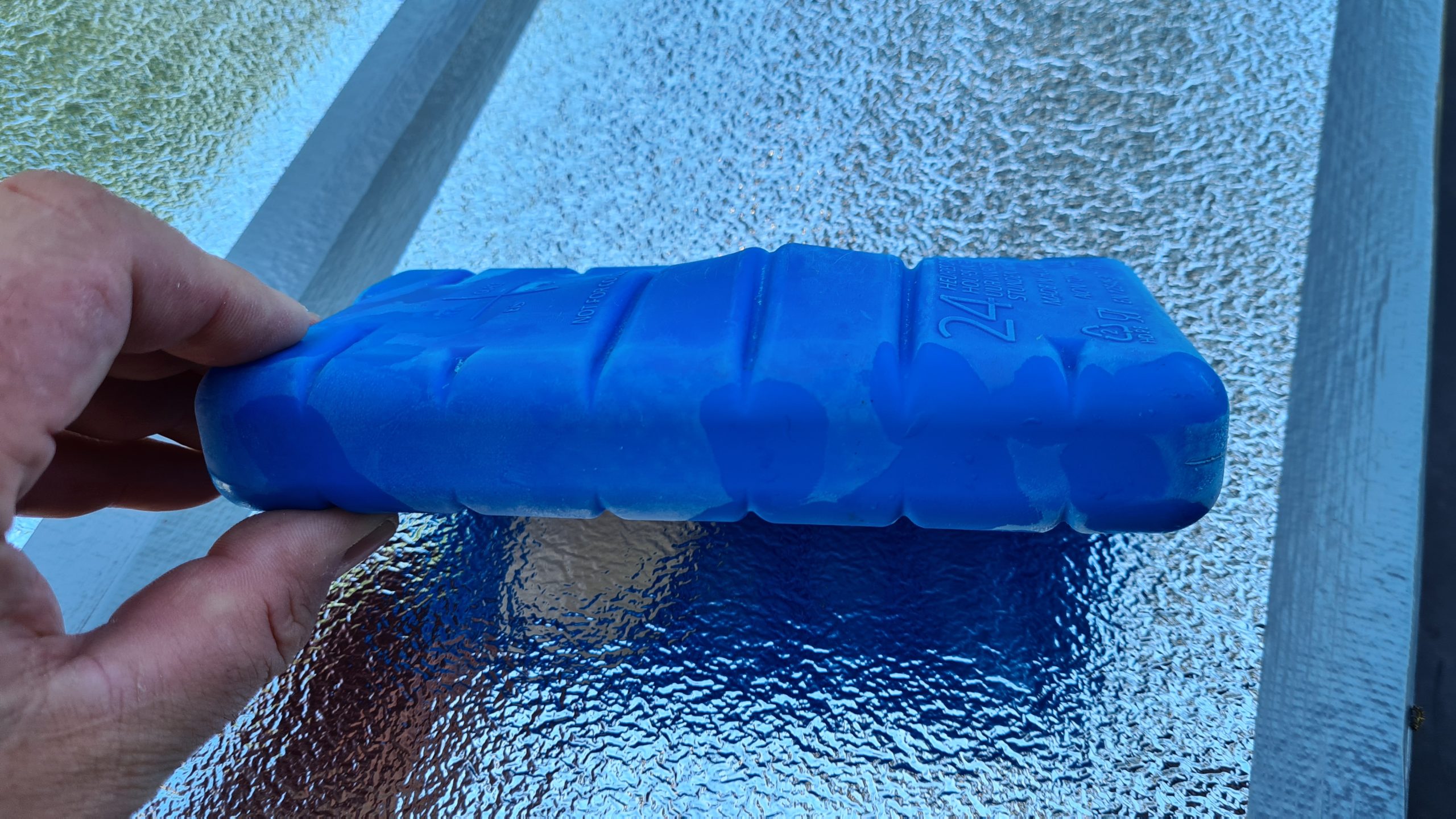
 

Bumblebees PLUS - Cooling block - possible deformation after freezing

Cooling block - possible deformation after freezing
Photo: O. Hercog (6/2021)
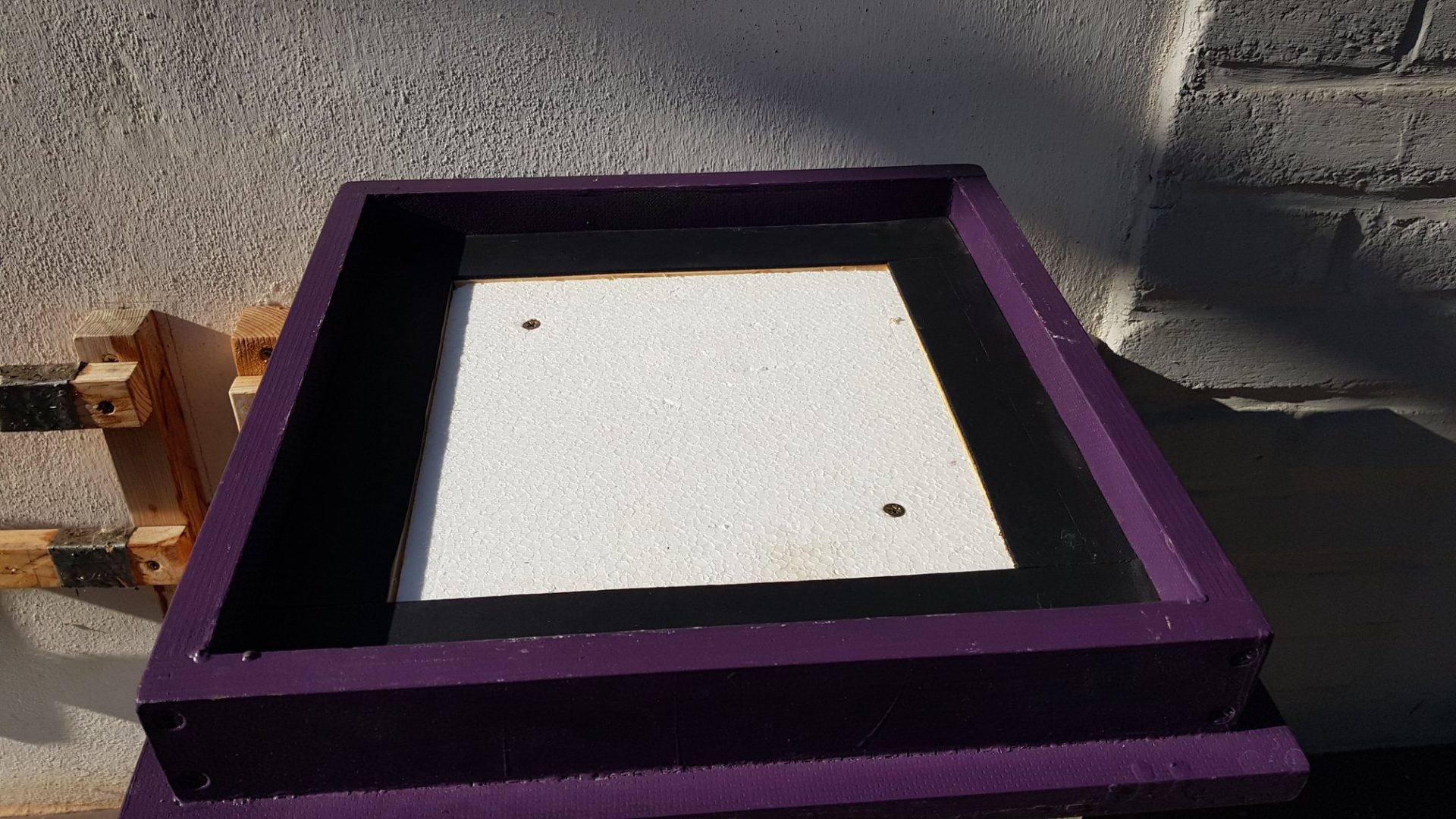


How to make such a frame

Good results can be achieved using:

  • Thermal insulation of the cooling frame (perimeter and roof)
  • The size of the frame, which covers as large an area of ​​the roof as possible, to avoid thermal short-circuiting (the roof cools in one place and is heated by warm air in another place)
  • Seal under the frame
  • Suitable volume of coolant
  • Heat-reflective foil around the frame (our favorite is Mirelon with aluminum foil)
  • In practice, it's about compromise and also about adapting to your type of hive and production capabilities

There is no completely universal guide. It is best to try it out in your conditions and "tune it". So, find a volume of cooling sides that will keep the food cold for the required time, but will not freeze. 


Lenka made a frame from scraps of plywood about 18 mm thick, connected the boards with screws. She covered the entire surface with Mirelon and provided the bottom surface with a seal.

Cooling gel pads or cooling blocks for portable refrigerators can be inserted into the interior. 

She also attached a plate to the roof, which allows for ventilation of the space under the roof and possibly shading of the hive (it cannot be placed in the sun)

Do not forget to remove the thermal insulation board from the roof of the shed, otherwise the heat dissipation of the shed will be ineffective!

Lenka also recommends putting weight on the frame on the roof.


If you are making the frame yourself, choose the height of the inner space of the frame so that 2-3 frozen blocks can fit in there and the frame sits well on the roof. Pay attention to the height - the blocks will increase in volume after freezing.

It goes without saying that the sun must not shine on the scarecrow.


Sealing under the roof on the battens. Removable internal insulation under the roof.
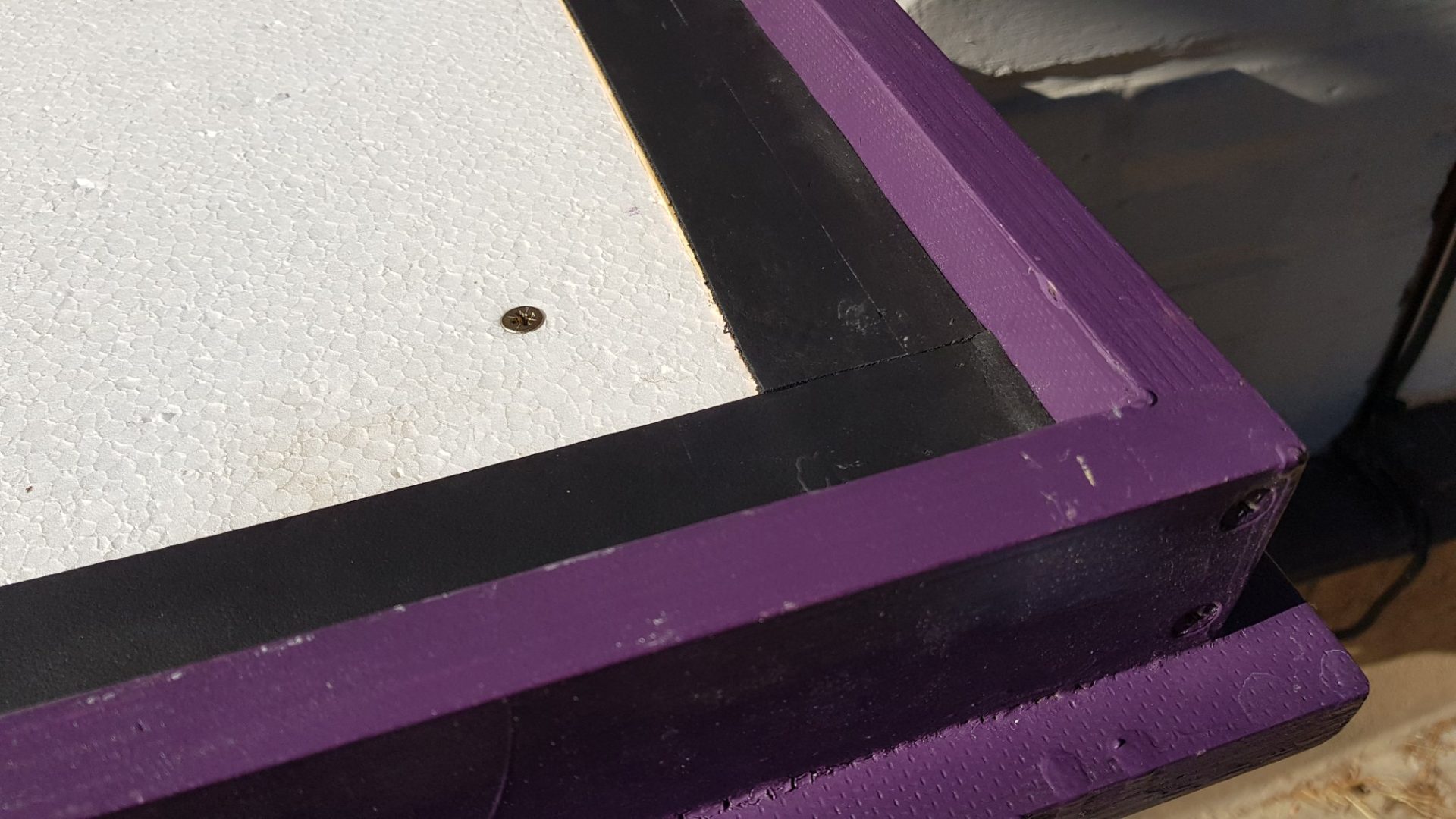
Sealing under the roof on the battens and removable internal insulation under the roof - detail.

You can read about the roof with a removable thermal insulation board HERE
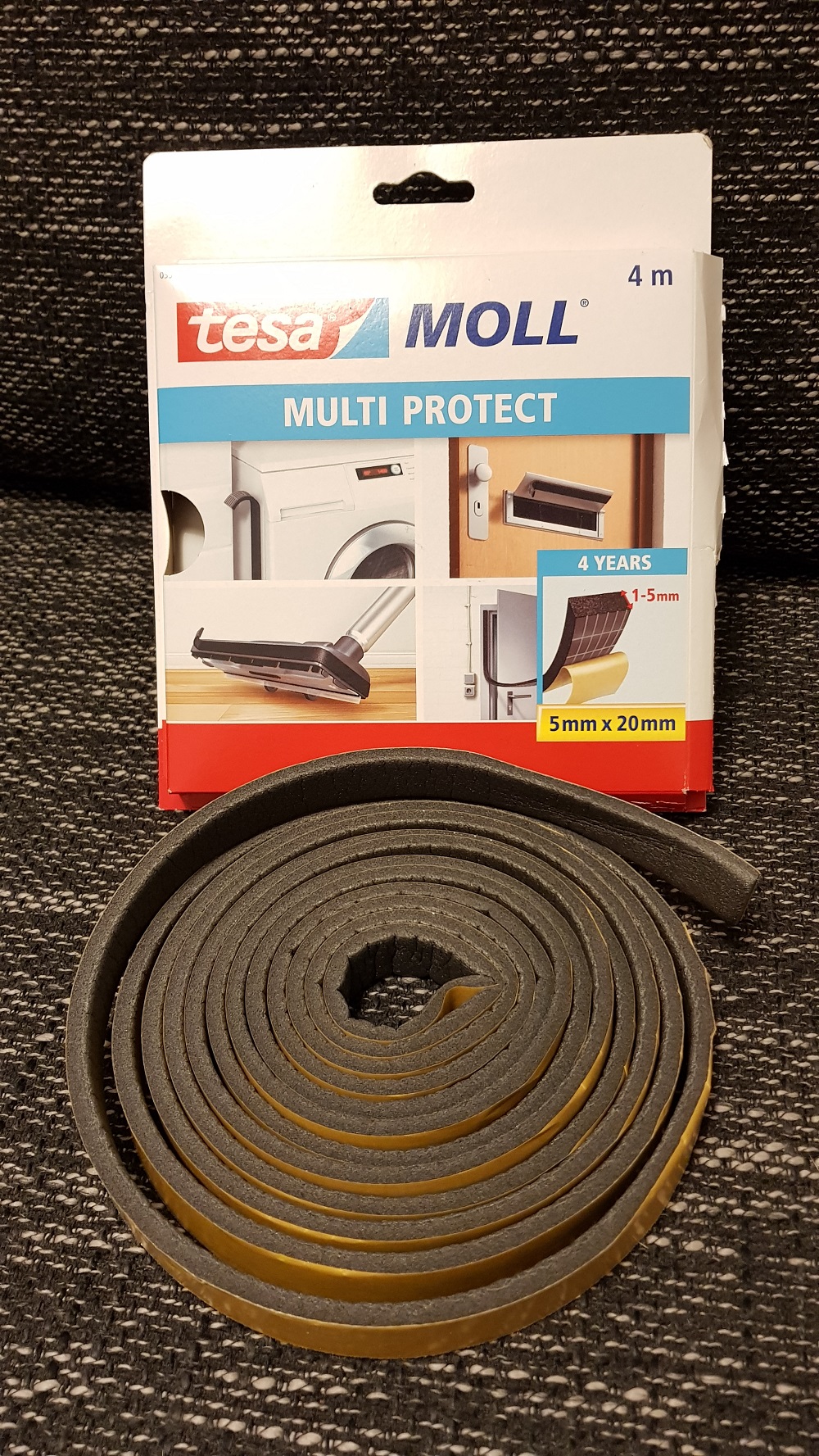
 

Bumblebees PLUS - Hive Seal - TESA

Beehive seal – TESA

Notes and tests Bumblebees PLUS

We tested the solution and here are some comments:

  • If the frame has a large mass, part of the capacity of the cooling blocks will be used to cool it. Therefore, it is better to make the frame thin and insulate it well on the outside - the roof and sides.
  • Depending on the solution and the volume of the “coolant”, the air temperature can be reduced quite significantly or even drastically by the lining, even by 15C – 20C. This is a large and sudden change in temperature. Therefore, we recommend a smaller cooling volume, which will not allow such a temperature jump and will not burden the bumblebees.
  • When we tested the solution, in the extreme case, 15C was measured on the surface of the lining and 30C on the bottom.
  • This solution has one disadvantage based on physics – condensation forms on the ceiling of the hive (the underside of the roof) during cooling, which can then drip into the nest. If there is a lot of it, the top can damage the nest. Humidity itself is not harmful, as long as the condensation does not flow into the nest.  
  • Heat transfer from the hive space will increase if you place a wet rag under the cooling block – the contact area of ​​the cooling medium x the roof will increase significantly; however, the cooling block will “wear out” a little faster
  • This solution does not solve improperly constructed hives. If such a hive is not well insulated, it is heated by warm ambient air from several sides. But that is a problem with the hive and not a problem with this solution
  • On hot days, it is not worth letting the water warm up and then cooling it down suddenly. It is better to give a smaller number of blocks (12x max) before the temperature rises and replace the block during the day (if possible)
  • Do not use this solution on days when maximum temperatures do not exceed 30 – 32C. On such days it is better to use more gentle cooling with a wet cloth and its evaporation
  • The condition for using a thermometer has already been mentioned above.
  • The placement of the thermometer is very important. There is no point in measuring the temperature in the lining, it is different in every place. Placing the thermometer (probe) in the air gap above the lining gives you at least some idea of ​​the air temperature in the hive. When using a cooling frame and the thermometer is cold air flowing over it, the measurement is not accurate. But it gives you some idea of ​​what it is like in the hive.
    If you use the same type of thermometer in your hives and place it in the same place, you can compare the temperatures in the hives. But do not expect to measure exact values.
  • Be aware of the accuracy of the thermometer you use. The accuracy of cheap thermometers is generally poor, +/- a few degrees. Without calibration, thermometers show different values ​​at the same time. However, they can be easily calibrated at home and taken into account.
Conclusion
  • Despite some disadvantages due to the laws of physics, this solution will allow to overcome critical temperatures on very hot days. Although it may be a relatively large temperature shock for bumblebees, it will allow them to overcome critical moments.
  • We therefore recommend using it only on days when temperatures are expected to rise to 35C and only during the day. 
  • After the outside temperatures drop, it is good to remove the condensate by ventilation (larger attachment, absorbent cloth under the roof) and return the humidity in the hive to values ​​around 90%

Possible alternative if you have limited production options

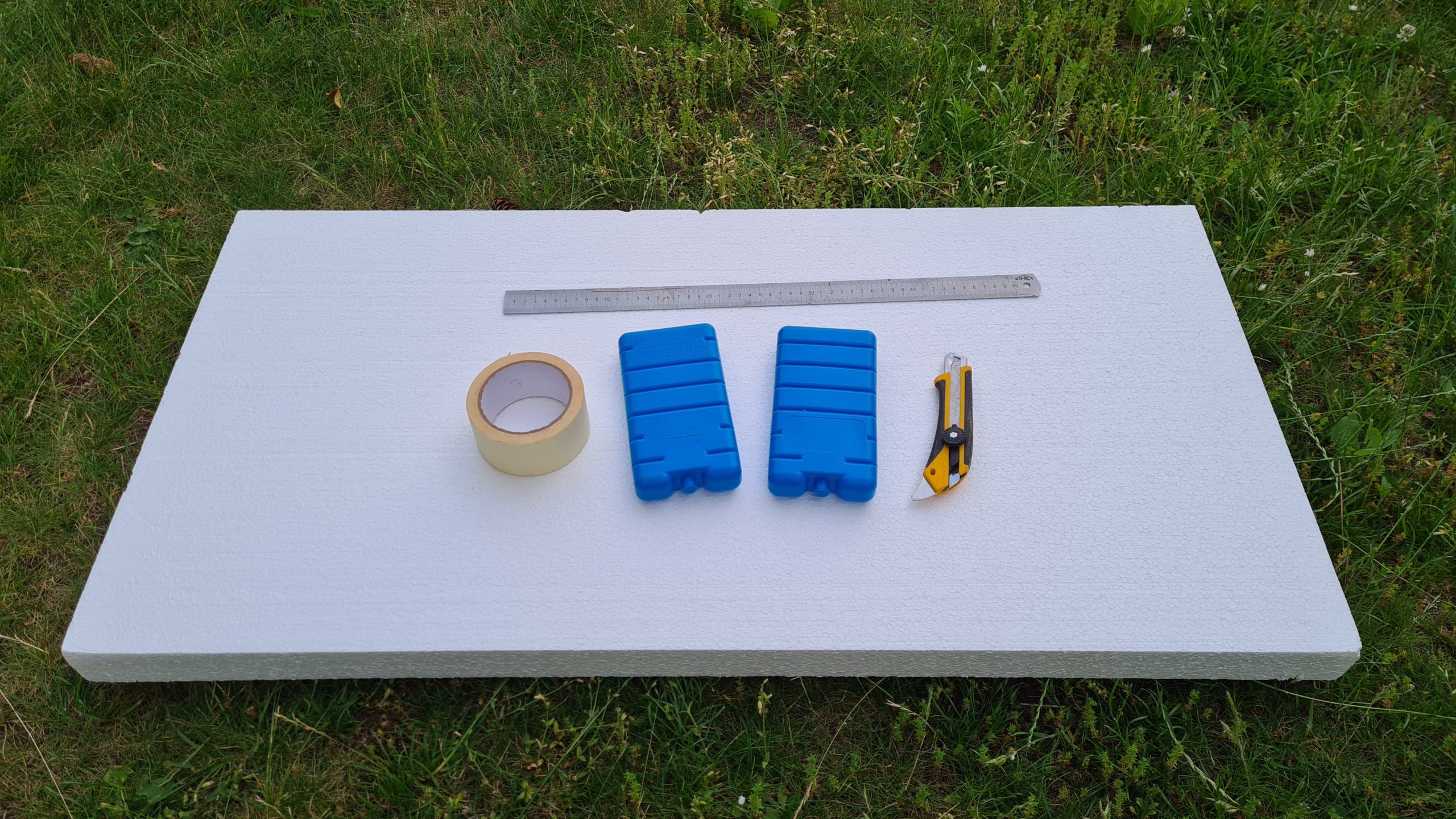
As part of the tests, we have designed an alternative cooling frame made of 50mm thick polystyrene board.

To make it, you only need a ruler and a sharp knife. You can glue the joints with polystyrene glue, or just wrap and tape them together.

The result can be covered with Mirelon insulation with carbon foil, and the joints can be taped over with "silver tape for everything".


The photos show two tested versions

a) a simple box covering the roof area

b) ditto with roof overhang – this solution fits well and limits the contact of the roof with the surrounding warm air

You can cut the seat in the board on the sides, or simply glue another 20mm board to it and you're done.

In both cases, the height of the space in the frame is 50 mm, which is sufficient for the universal blocks used from the hobby market


Bumblebees PLUS - Polystyrene cooling frame

Polystyrene cooling frame
- what you need
Photo: O. Hercog (6/2021)
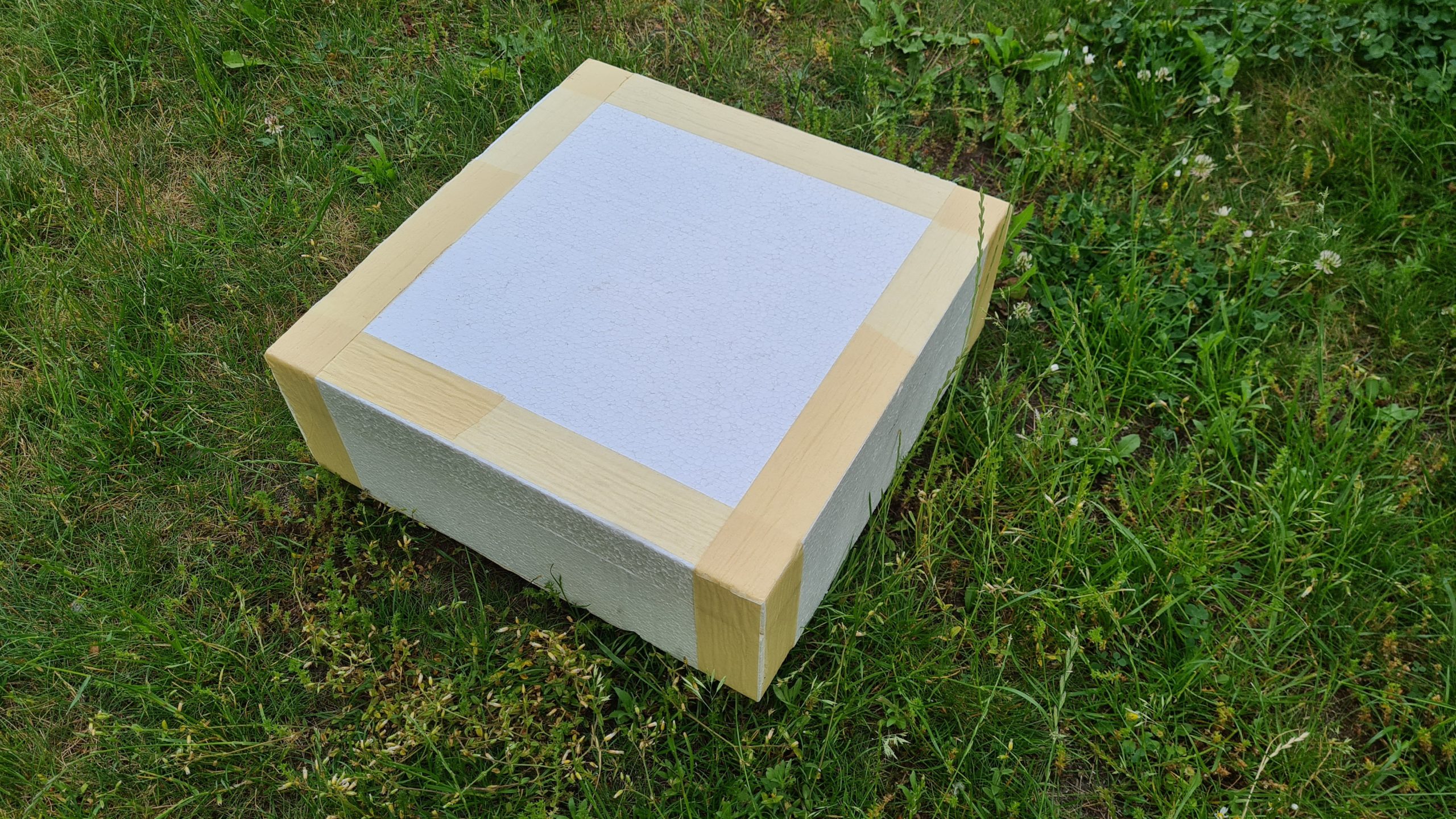
Bumblebees PLUS - Polystyrene cooling frame - adhesively bonded or taped boards

Polystyrene cooling frame - boards glued together or taped together
Photo O. Hercog (6/2021)
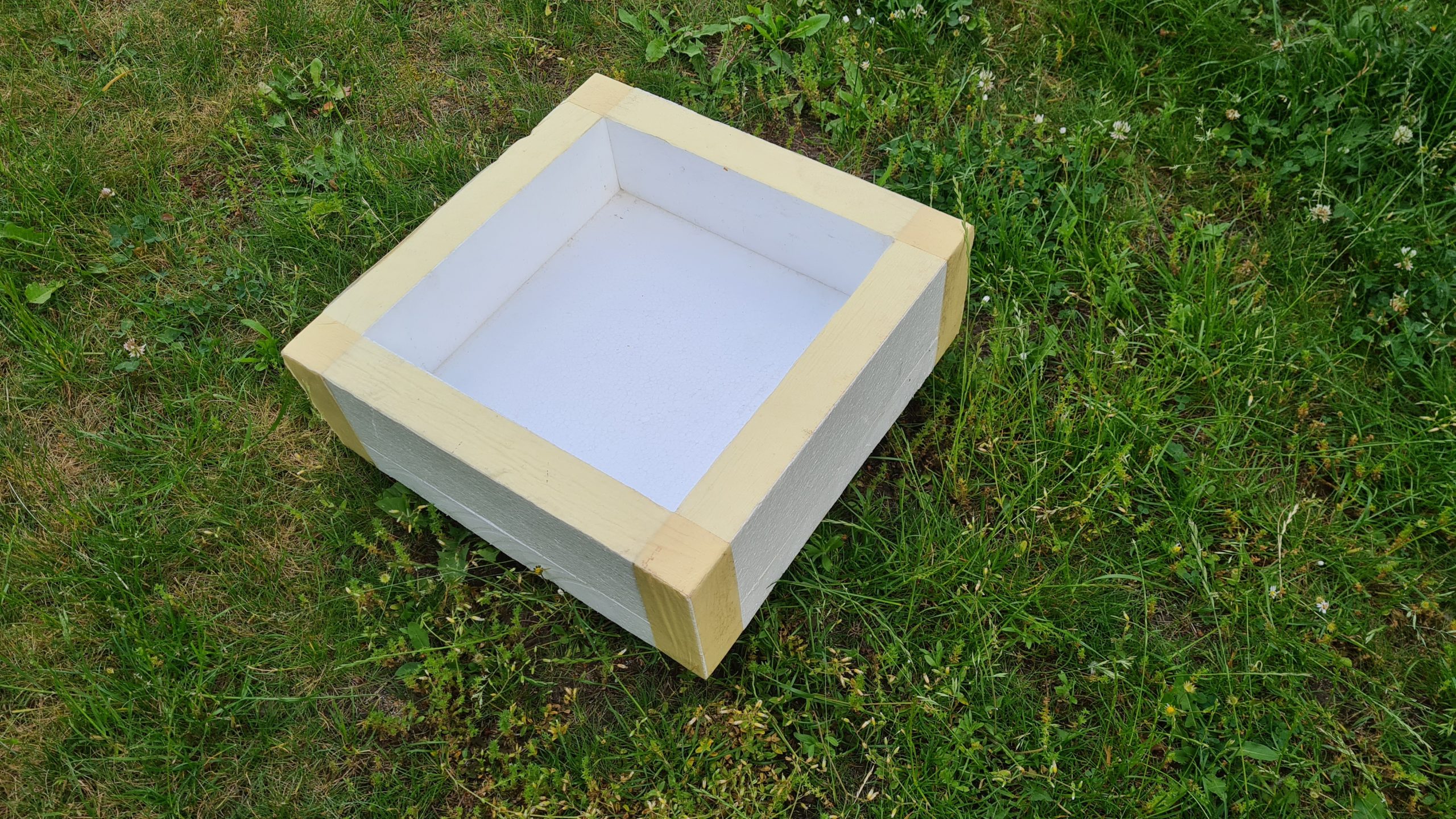
Bumblebees PLUS - Polystyrene cooling frame - adhesively bonded or taped boards

Polystyrene cooling frame - boards glued together or taped together
Photo O. Hercog (6/2021)
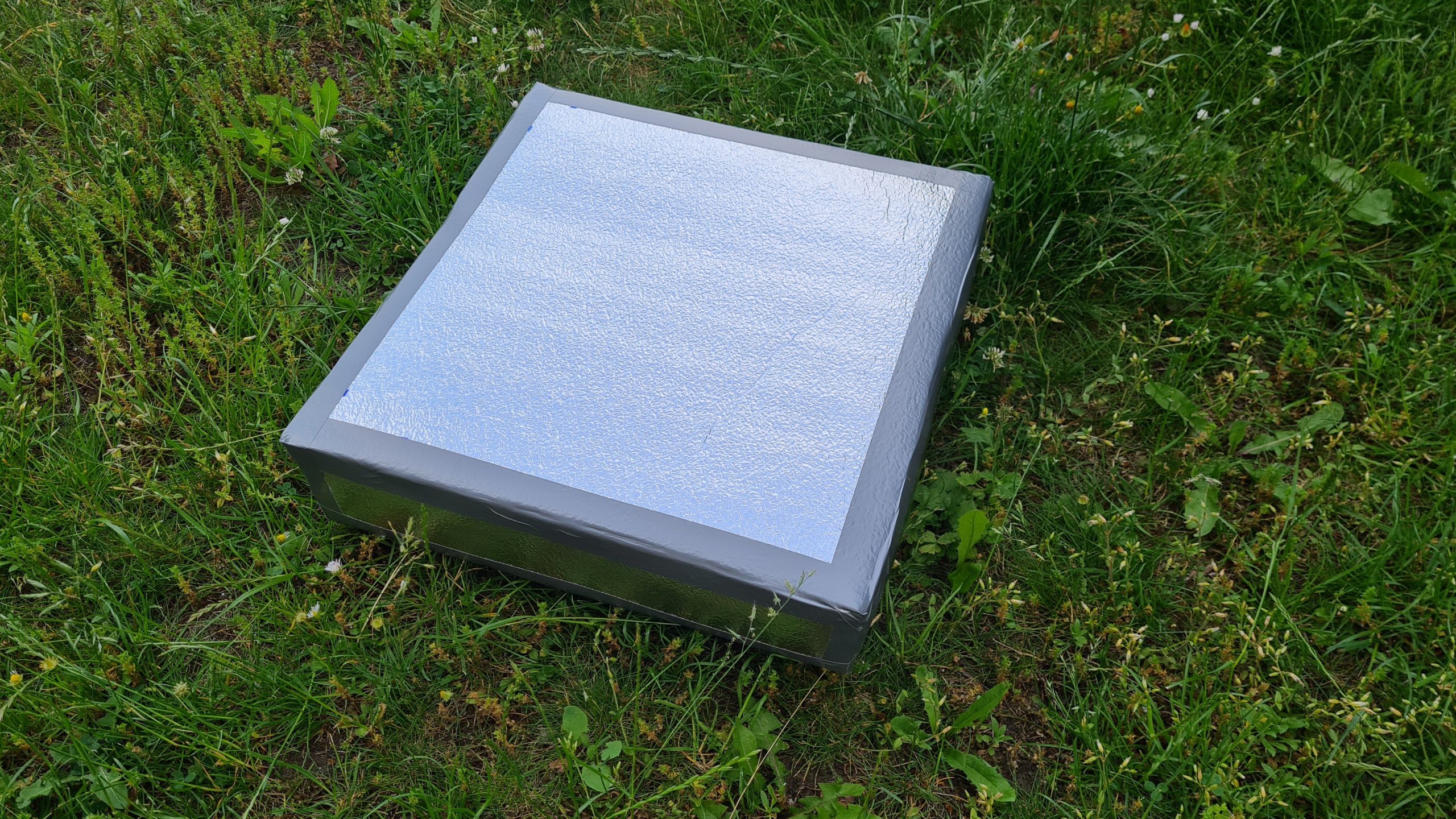
Bumblebees PLUS - Polystyrene cooling frame - simple version lined with Irelon with aluminum foil

Polystyrene cooling frame - simple version lined with Irelon with aluminum foil
Photo O. Hercog (6/2021)
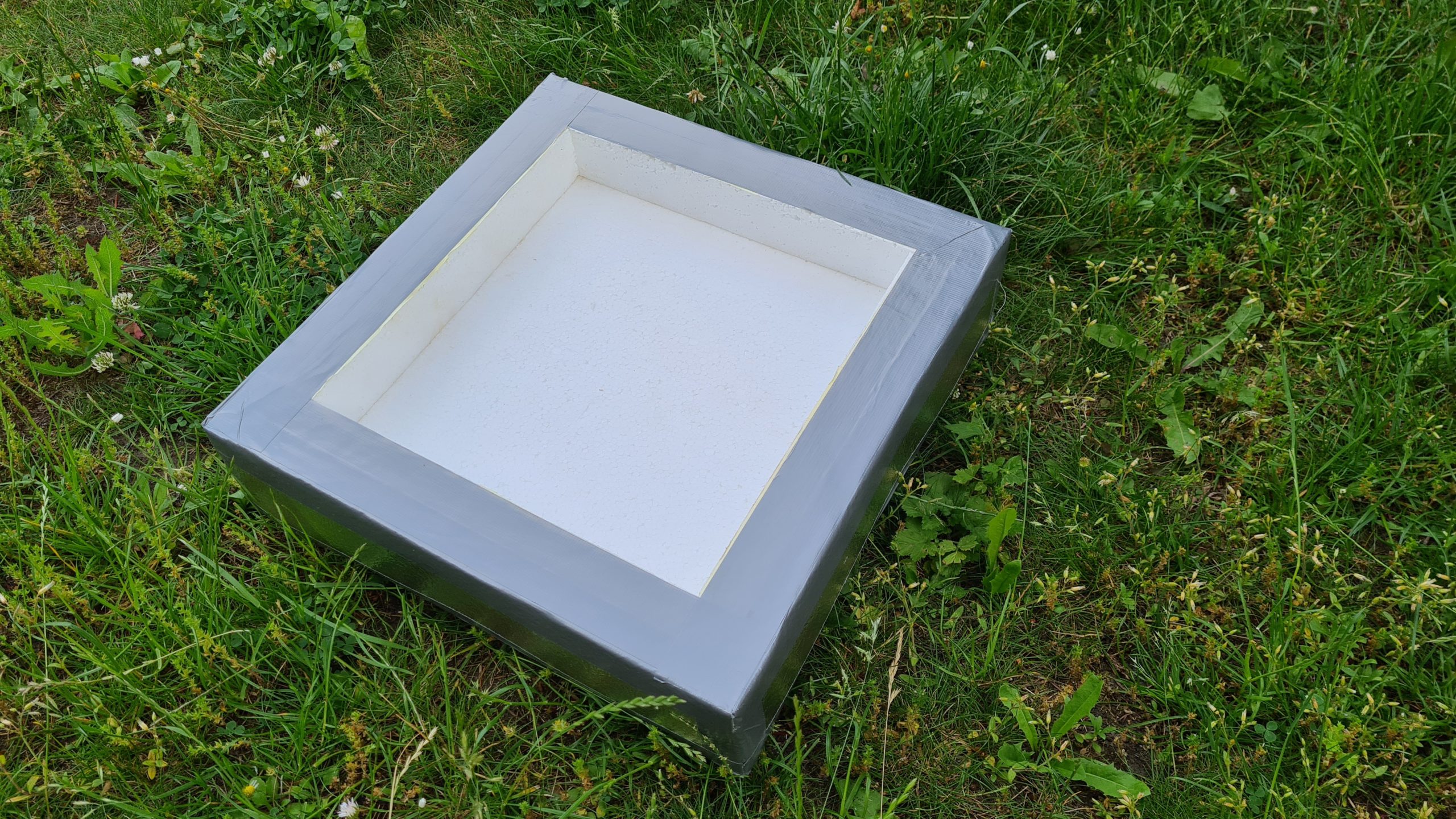
Bumblebees PLUS - Polystyrene cooling frame - simple version lined with Irelon with aluminum foil

Polystyrene cooling frame - simple version lined with Irelon with aluminum foil
Photo O. Hercog (6/2021)
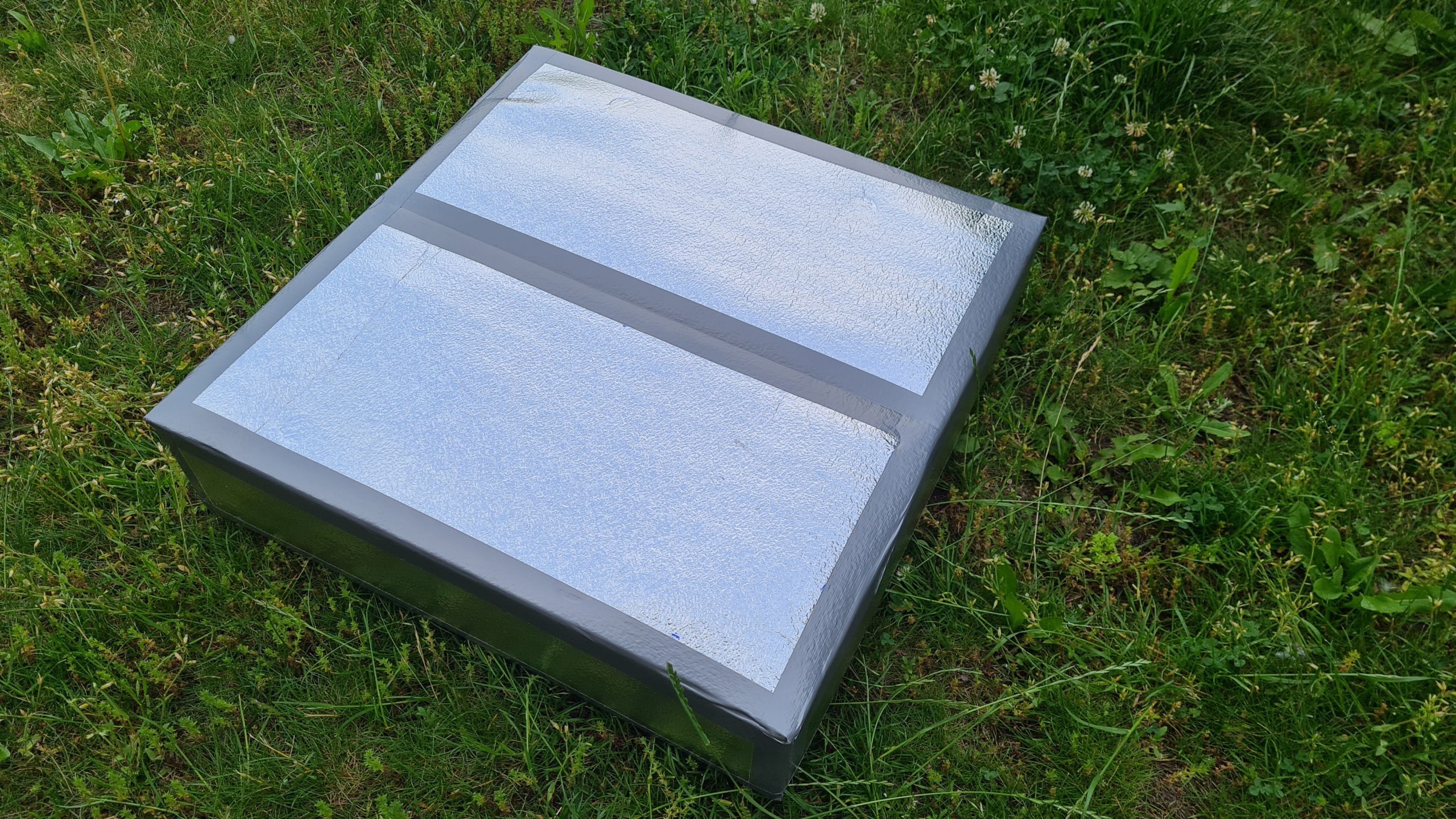
Bumblebees PLUS - Polystyrene cooling frame - Variant with mounting and roof overhang

Polystyrene cooling frame - Variant with mounting and roof overhang
Photo: O. Hercog (6/2021)

Polystyrene cooling frame - Variant with mounting and roof overhang
Photo: O. Hercog (6/2021)
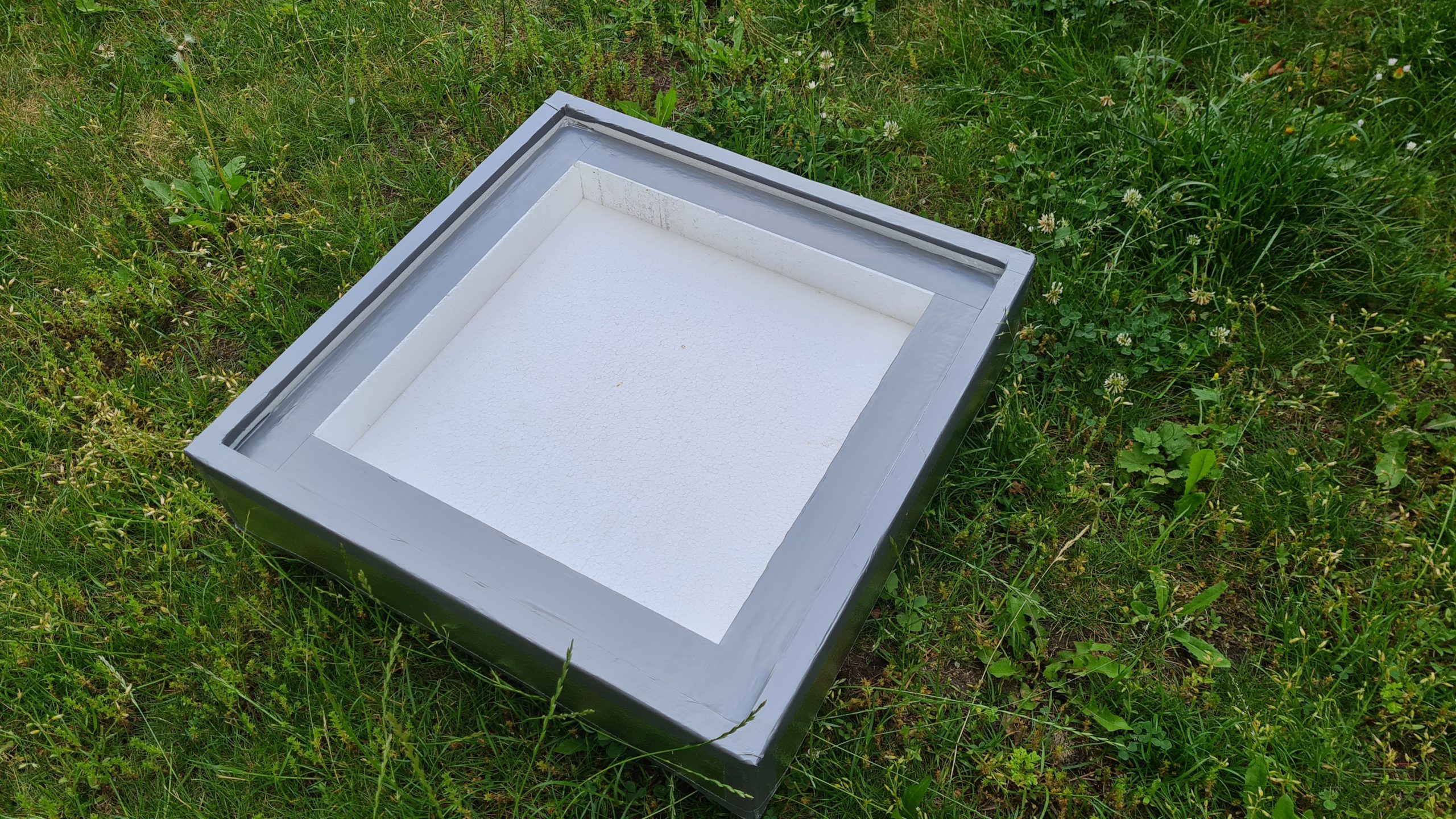
Bumblebees PLUS - Polystyrene cooling frame - Variant with mounting and roof overhang

Polystyrene cooling frame - Variant with mounting and roof overhang
Photo: O. Hercog (6/2021)
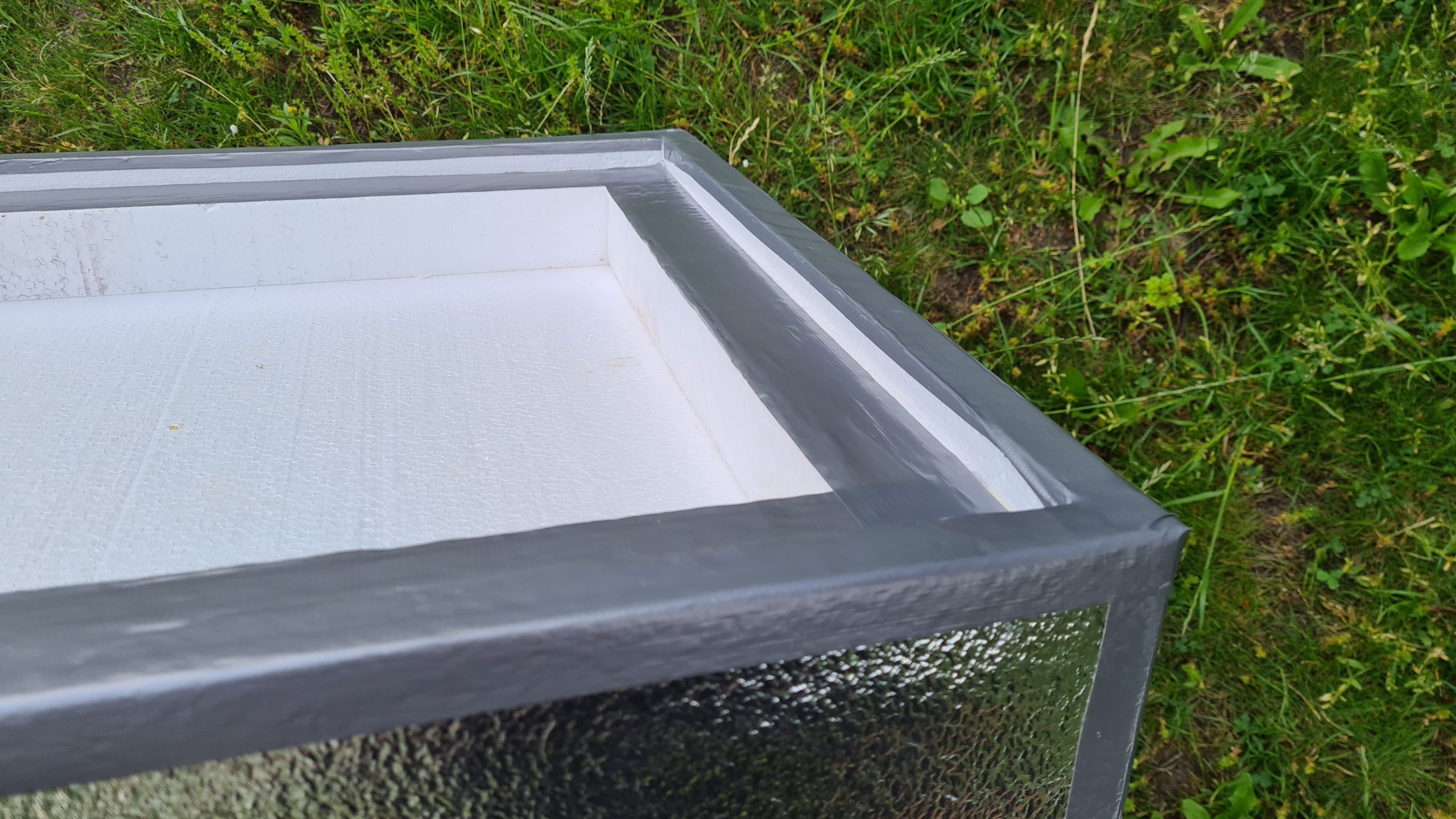
Bumblebees PLUS - Polystyrene cooling frame - cooling block

Polystyrene cooling frame - cooling block
Photo: O. Hercog (6/2021)
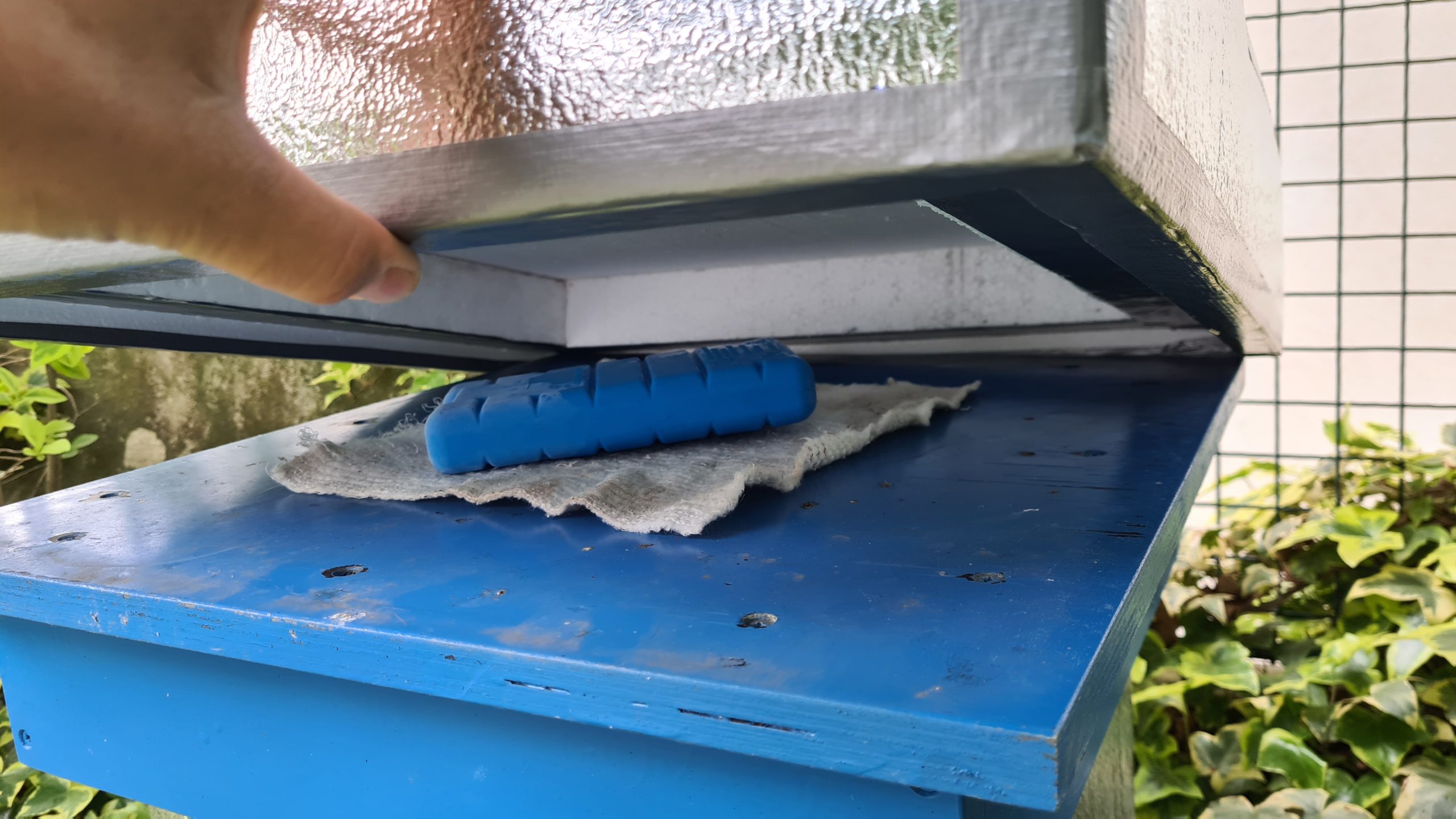
Bumblebees PLUS - Polystyrene cooling frame - cooling block

Polystyrene cooling frame - cooling block backed with a wet rag to increase the contact surface
Photo: O. Hercog (6/2021)

.
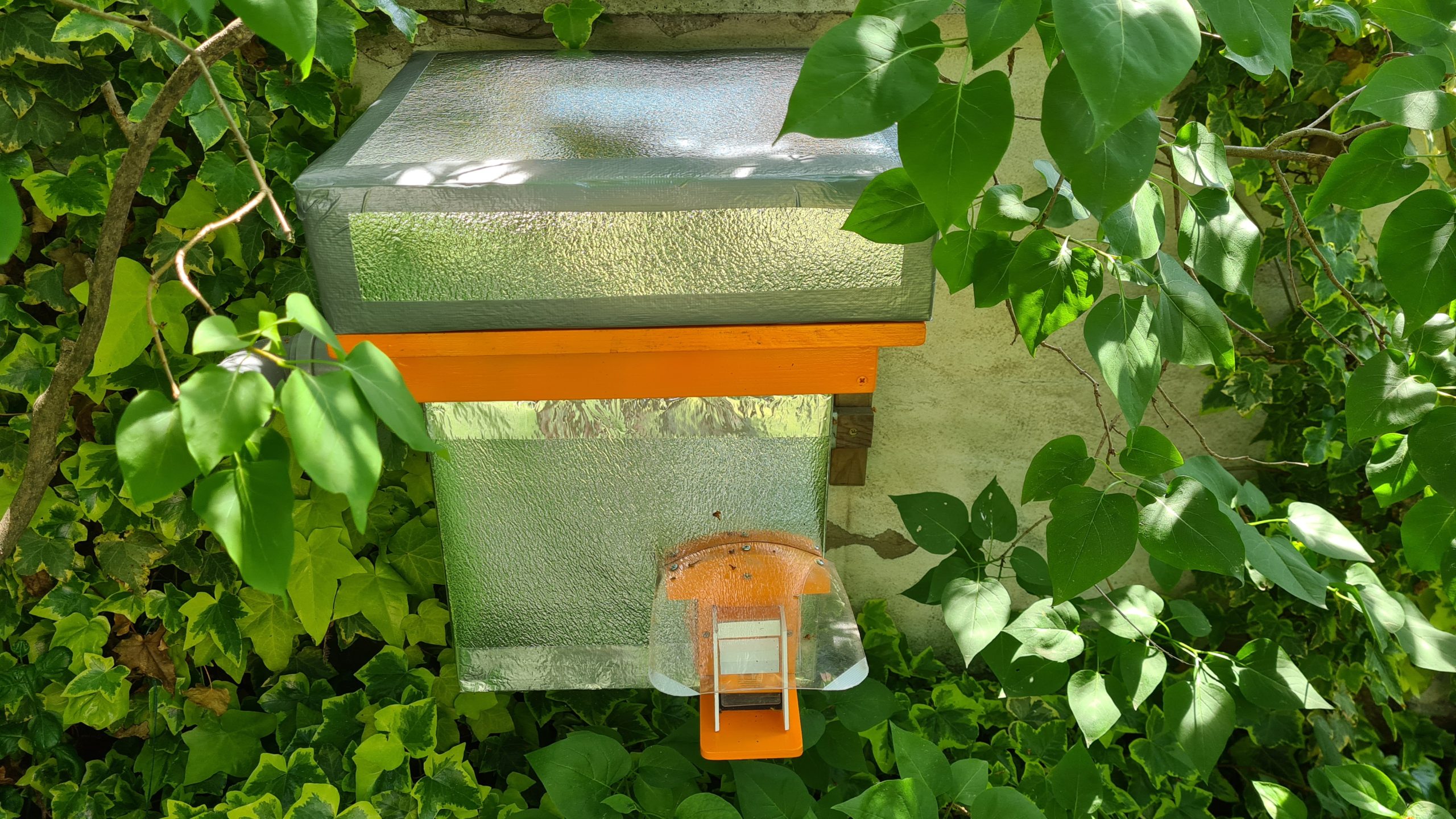
Bumblebees PLUS - Polystyrene cooling frame on the hive

Polystyrene cooling frame on a hive
Photo O. Hercog (6/2021)
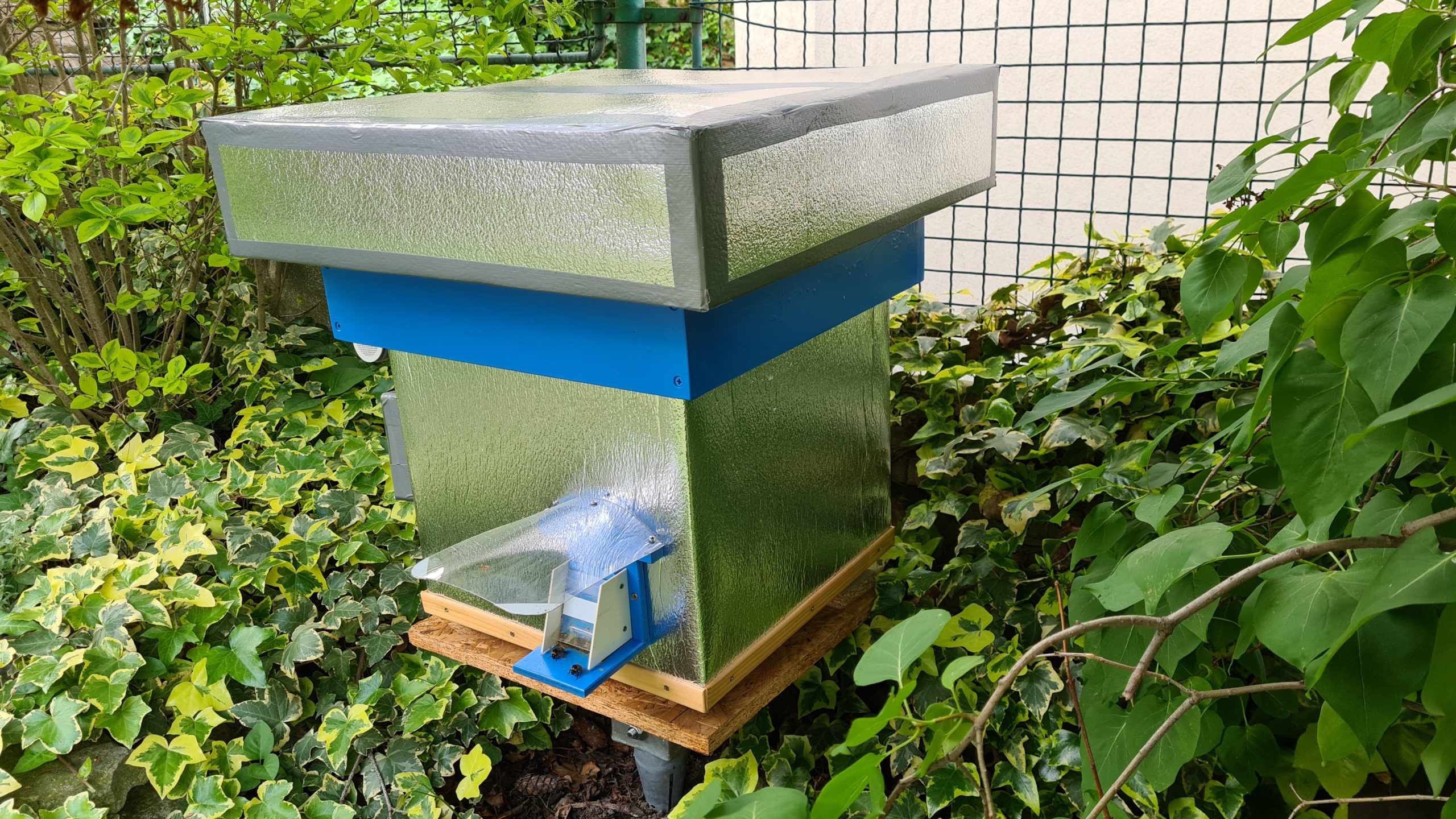
Bumblebees PLUS - Polystyrene cooling frame on the hive

Polystyrene cooling frame on a hive
Photo O. Hercog (6/2021)


Temperatures in the hive during the day

we are preparing