
How to distinguish an already settled bumblebee from a searching mother
What you will learn here
- What does a mother bumblebee do after waking up?
- How it looks for a place to nest – a nesting site
- How to reliably recognize such a mother
- Why mothers sometimes don't nest even when they are looking for a nesting site
Last updated: 23/2/2024

In a nutshell
- Bumblebee queen mothers are waking up: mothers are waking up gradually, first the early species – they are awakened by the spring sun, which warms the ground where they hibernate
- After waking up, it's hungry and time to explore: their first goal is to find enough food and replenish their energy after a long winter sleep and stay warm - that's why they feed and rest often.
- Mothers "dance" in the spring: as soon as they have replenished their energy, they start looking for a nesting site - they don't want to nest right away, but they look around and wait for the right time when there will be enough food. They search most often near the ground and "dance" their search flight
- Typical bumblebee nesting sites by bumblebee species: burrows of small rodents in the ground, birdhouses and cavities after bird nests, piles of old grass and sod, insulation in roofs and attics, old blankets and carpets, blankets in dog houses, etc.
- Water must not flow into the nesting site: bumblebees instinctively look for places where they will not be washed away by rain
- Pigeons and queen mothers return home: if the mothers survive hibernation, instinct leads them to the place where their natal nest was. This is a joy for the breeder but also a worry at the same time
- Respect the queen mothers in the spring: if you find a mother bumblebee resting, respect her. If she is clearly in need, you can offer her help, but consider whether she really needs it.
English Abstract
- Queen queen bumblebees wake up: queens wake up gradually, first the early species – they are awakened by the spring sun which warms the ground where they hibernate
- After waking, it's hungry and time to explore: their first goal is to find enough food and replenish energy after a long winter, sleep and warm up – so they feed and often rest
- Mothers "dance" in spring: once they have replenished their energy, they start looking for nesting sites – they don't want to nest right away, but look around and wait for the right time when there will be enough food. They look mostly near the ground and "dance" their search flight
- Typical bumblebee nesting sites by bumblebee species: burrows of small rodents in the ground, birdhouses and cavities of bird nests, piles of old grass and gossip, insulation in roofs and attic spaces, old blankets and carpets, a blanket in a doghouse, etc.
- No water in beehive please: Bumblebees instinctively look for places where rain will not wash them away.
- Pigeons and queen pigeons return home:
if the queens survive hibernation, instinct leads them to the place where the natal nest was. This is a joy for the breeder but a worry at the same time Respect queen mothers in spring: if you find a bumblebee mother resting, respect her. If she is demonstrably distressed, you can give her help. But consider if they really need such help or not.
Contents
Introduction
Queen Mothers Awaken
What nesting sites do bumblebees look for?
How to recognize a queen looking for a nesting site?
When a queen is looking for a nesting site, does she always start nesting there?
How to distinguish between a queen who is looking for a nesting site and one who is not?
What if several queens meet in a suitable nesting site?
Do queens need help in the spring – when and if so, what kind?
Introduction
In this chapter we will look at an important detail from the life of the queen mother, which is finding a suitable place to nest , i.e. a nesting site . We follow up on the chapter From the life of bumblebees - how it goes in the nest .
When a mother bumblebee wakes up, she has a lot of work ahead of her and will soon start looking for a place to nest (nest site). First, however, she needs to strengthen herself enough food nearby .
It is interesting to see how the mother is looking for a nesting place. We can see such a situation in the spring , when they are looking for the mother's nest after hibernation.
With a little luck, a similar situation can be observed in the beginning of summer , when mothers who have decided not to hibernate try to nest. However, there are fewer such cases than in the spring.
It is important to observe the mothers and their flight and behavior. This will tell us that they are really looking for a nesting site . This is extremely important so that the breeder can correctly decide whether it makes sense to offer the queen mother a scare, or even when it is not allowed.
However, it is important to remember that even when the mother is looking for a nesting site, she does not always want to settle down right away . Sometimes she just looks around and chooses a place to which she will return later . That is when she is ready and when the conditions are really suitable .
Impatience and stubbornness are common mistakes of novice beekeepers that lead to failure . Trying to settle a bumblebee queen right away or expecting her to behave according to a fixed algorithm and your plan is also a mistake .
It is necessary to give things time and not to push the saw . Over time, the breeder will learn to respect nature and the fact that it does not behave as he would like. The disappointed breeder will then recognize from a number of signs that he has met a mother who is ready to nest. But that is for years of practice...
Therefore, we will devote sufficient space to this topic.
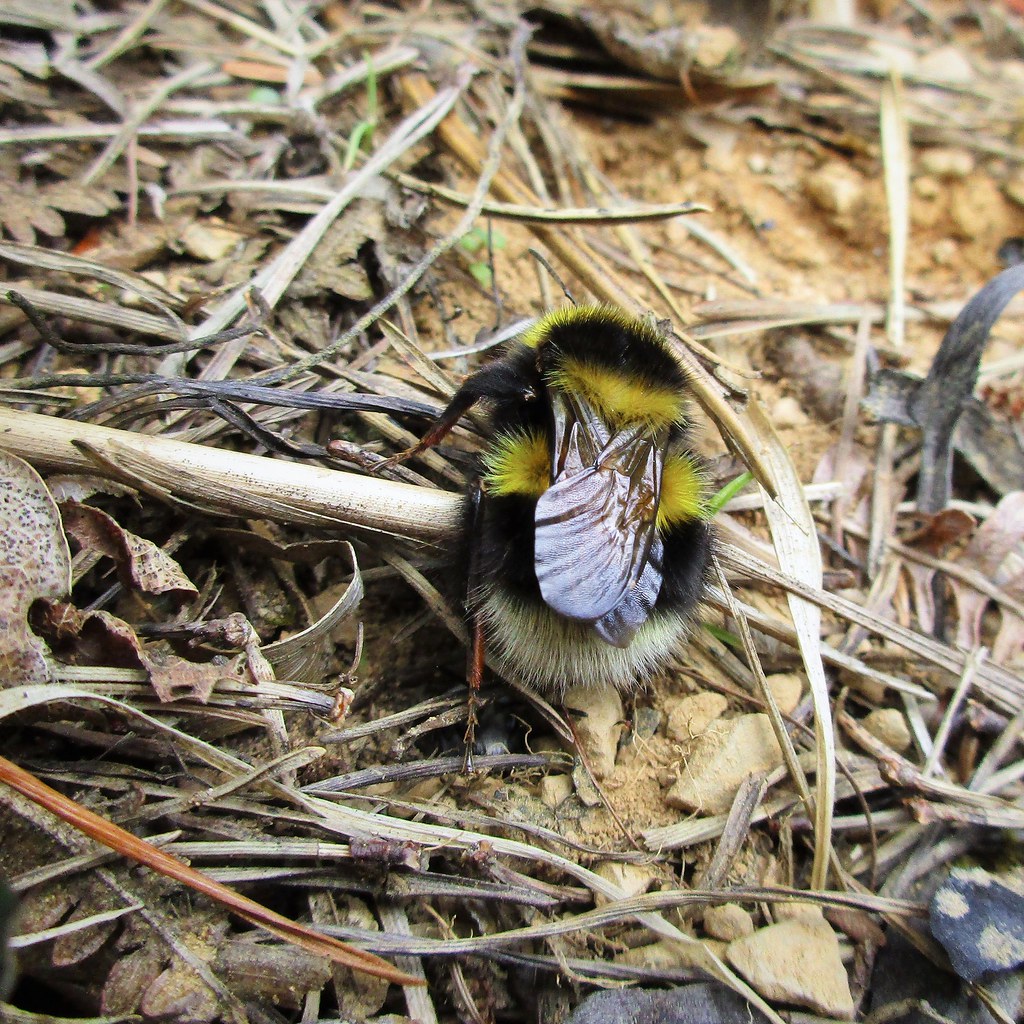
Mother bumblebee after waking up
Photo Flicker
The Queen Mothers are awakening
Bumblebee queens appear gradually - depending on the species and mainly on the weather, mainly on the temperature of the air and soil in which they slept.
With increasing altitude or in deep cold valleys, they appear gradually. The difference can be in units of weeks. Everything is also influenced by the overall climate and situation.
Example:
At the beginning of March 2020, many breeders had already settled the queens. Then came two waves of cold weather
In the first decade of March 2021, we recorded a number of mothers waking up early, but none had yet made a search flight – trying to find a nesting site
The first to appear are the queen mothers of the wood bumblebee (Bombus lucorum) and the ground bumblebee (Bombus terrestris). In good weather, they can appear as early as early March or April .
These species take the risk of not finding enough food. If they do find it, there is relatively little food competition, they consider it an advantage and therefore take such a risk .
Queen bumblebees (Bombus sylvarum) are almost the last to appear, until May or June .
However, with the changing climate, the time of awakening of the mothers is shifting. The mothers are awakened by the rising temperature of the soil in which they hibernated and by sunlight, which is not dampened by clouds or snow cover. The border between winter and spring is becoming less and less clear... But the changing climate also brings significant fluctuations in the weather , see our example.
When the queen mother recovers from hibernation, she must first strengthen and recover . That is why she is first interested in feeding .
She gains the weight she has lost - that is why she is interested in nectar from spring flowers, which is a source of energy, and pollen, which is a source of protein for her. She has been drawing energy from her fat body all the time in the hibernaculum.
The mother knows very well that she will not stop until the end of her life and if she is not strong, her task of "founding the next generation" will not be fulfilled. So the mother feeds on flowers .
When she finds that favorable conditions have arisen , she gradually begins to look for a place where she can establish a nest. With the intake of fresh food, the processes that lead to the development of the ovaries .
Only then is the mother ready to establish a nest and will she really start actively searching for it.
Interesting fact
- The last to wake up are
the mother bumblebees . They will also search, but they are not looking for a place to nest, but a bumblebee nest that they could take over. That is why the mother bumblebees wake up last – they wait for the right moment, often buried deeper than the mother bumblebees on which the bumblebees want to parasitize. You can read more about bumblebees on the page bumblebees and bumblebee breeding
What places do bumblebees look for to nest?
Bumblebee queens primarily look for cavities where they can settle and begin building their nests. The exception is the field bumblebee (Bombus pascuorum), which will also settle in a clump of old grass.
Bumblebees cannot create a cavity, nor can they build a nest out of paper like wasps and hornets. The size of the cavity they seek corresponds to the needs of their species. The number of individuals in a nest varies from 50 to 800, depending on the species and conditions.
1. In the ground
Some species of bumblebees look for cavities in the ground , such as the ground bumblebee (Bombus terrestris) , the wood bumblebee (Bombus lucorum) , or cavities in walls and rocks , such as the rock bumblebee (Bombus lapidarius) .
2. Tree cavities with bird nests, birdhouses, roof insulation
Other bumblebees prefer tree cavities, thermal insulation under roofs, and empty birdhouses , such as the hypnotic bumblebee (Bombus hypnorum) or the meadow bumblebee (Bombus pratorum) .
3. On the surface and just below it
Some species can live both underground and above ground. Examples include the garden bumblebee (Bombus hortorum) and the pasture bumblebee (Bombus pascuorum) .
Of course, there may be many exceptions, see for example the bumblebee nest in a birdhouse in the video.
The cavity must also contain a sufficient amount of heat-retaining lining (for example, a mouse/bird nest), must not be drafty and must not leak .
The mother must examine and consider all this – alone and in the dark. She must also examine the thermal insulation properties of the cavity.
We have not yet found any suitable literature on this, but we believe that it will use similar methods as bees (but there it is done by a group of workers). It will walk through the cavity, exploring it by smell and touch with its antennae . It will also swirl its wings, with which it will " measure the size of the cavity ". The buzzing sounds that the mother-queen makes when exploring the cavity certainly have their meaning.
A view of the nest being explored by the mother can be found in the following text.
We describe what the hive should look like and what the queen mothers will accept in our instructions, for example on the page Preparing the hive before the season .
Interesting fact
- Sometimes it is not important for the mother whether the cavity is empty or not. If there is nothing else to do, the mother-queen can expel the original owner (mouse, small bird) - such belligerence is quite common in the hypnotic bumblebee (Bobmus hypnorum).
- If necessary, the queen mother will fight for the nest cavity with other bumblebees and even with her sisters - see the next text)
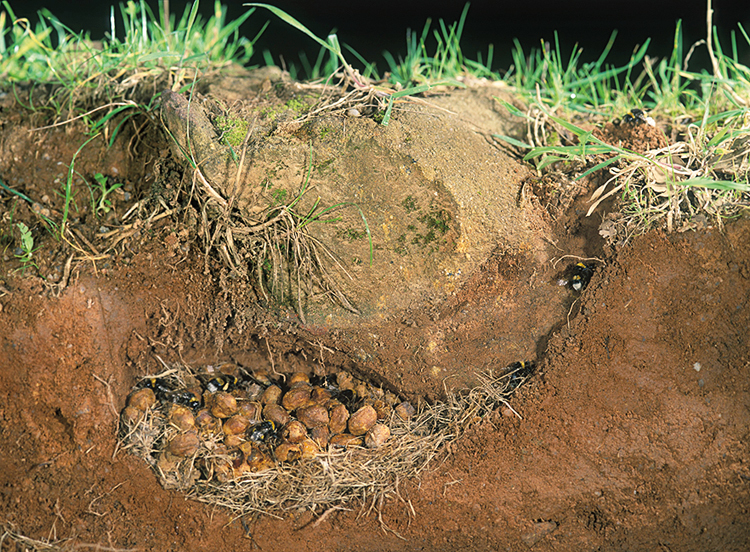
Bumblebee nest in a rodent burrow Stock Photo Images
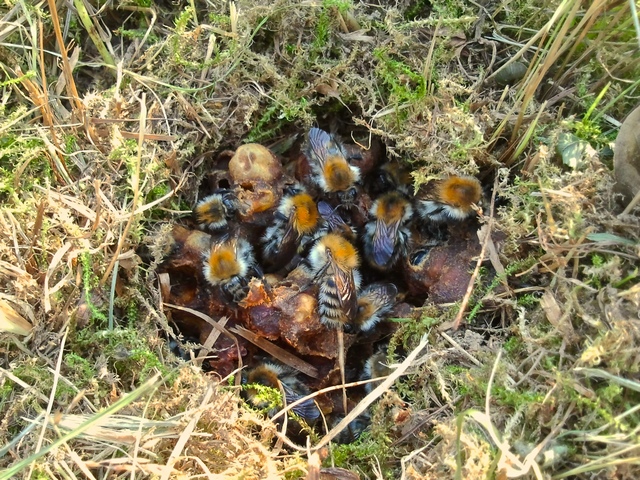
Nest of field bumblebees (Bombus pascuorum) in a pile of grass
Photo Internet
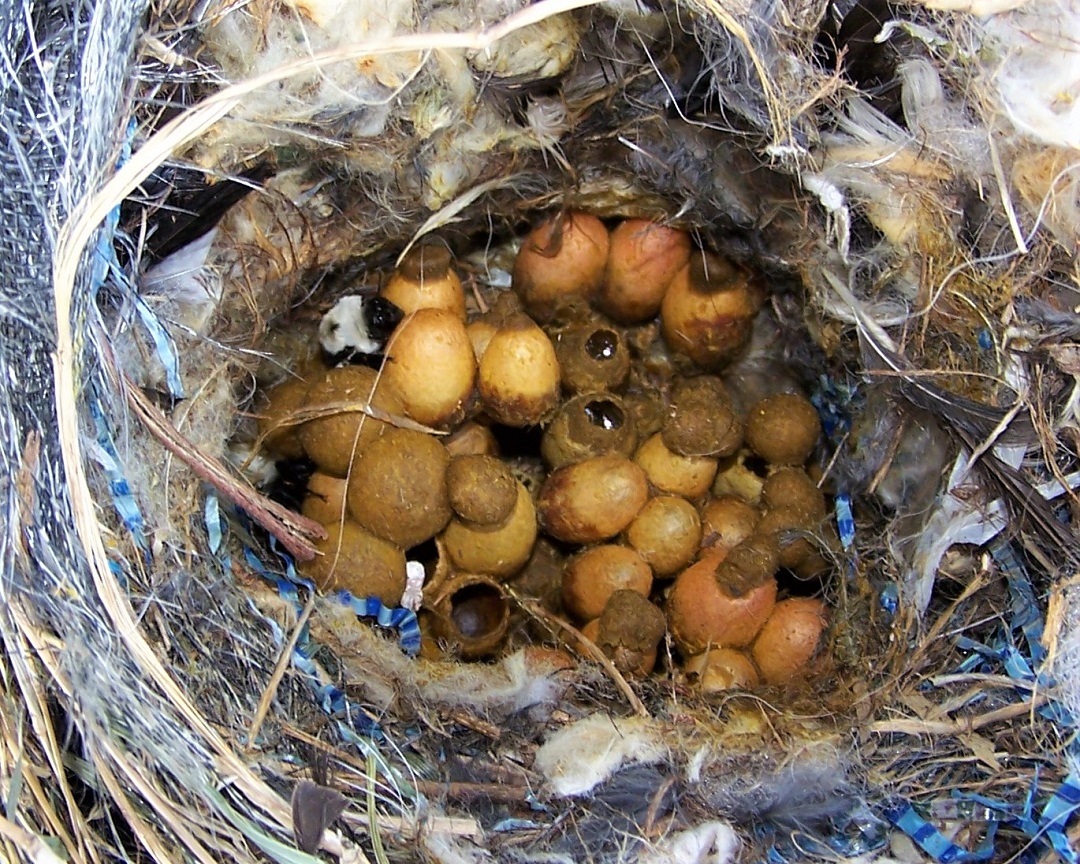
A nest of hypnotic bumblebees (Bombus hypnorum) in a birdhouse
Photo The Peace Bee Farmer
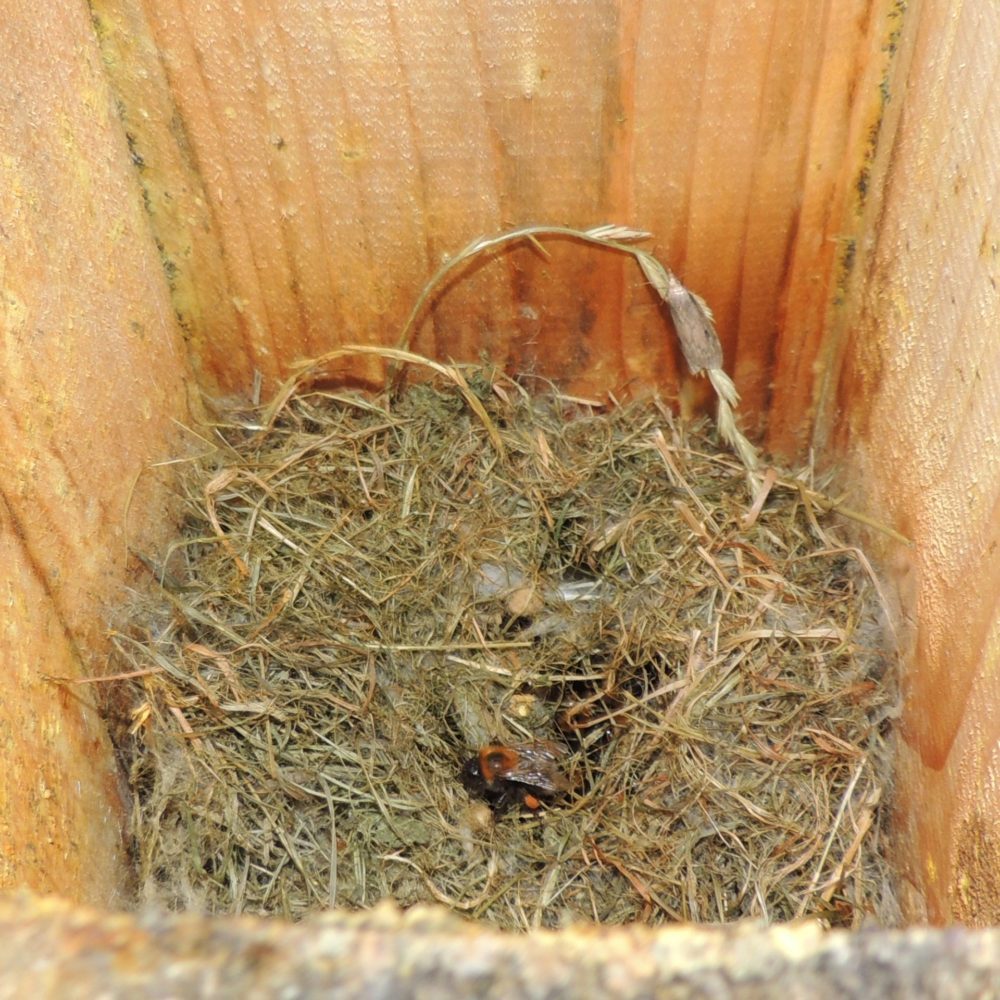
A nest of hypnotic bumblebees (Bombus hypnorum) in a birdhouse
Photo Jesus college Nature Trail
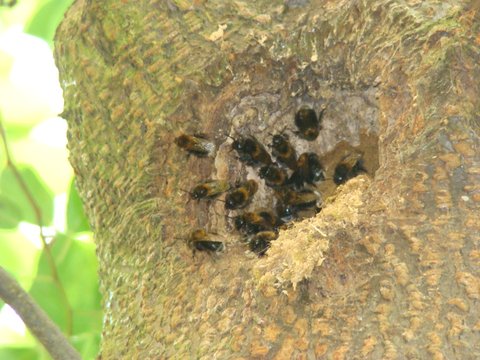
Bumblebee nest (Bombus hypnorum)
Photo Jesus college Nature Trail
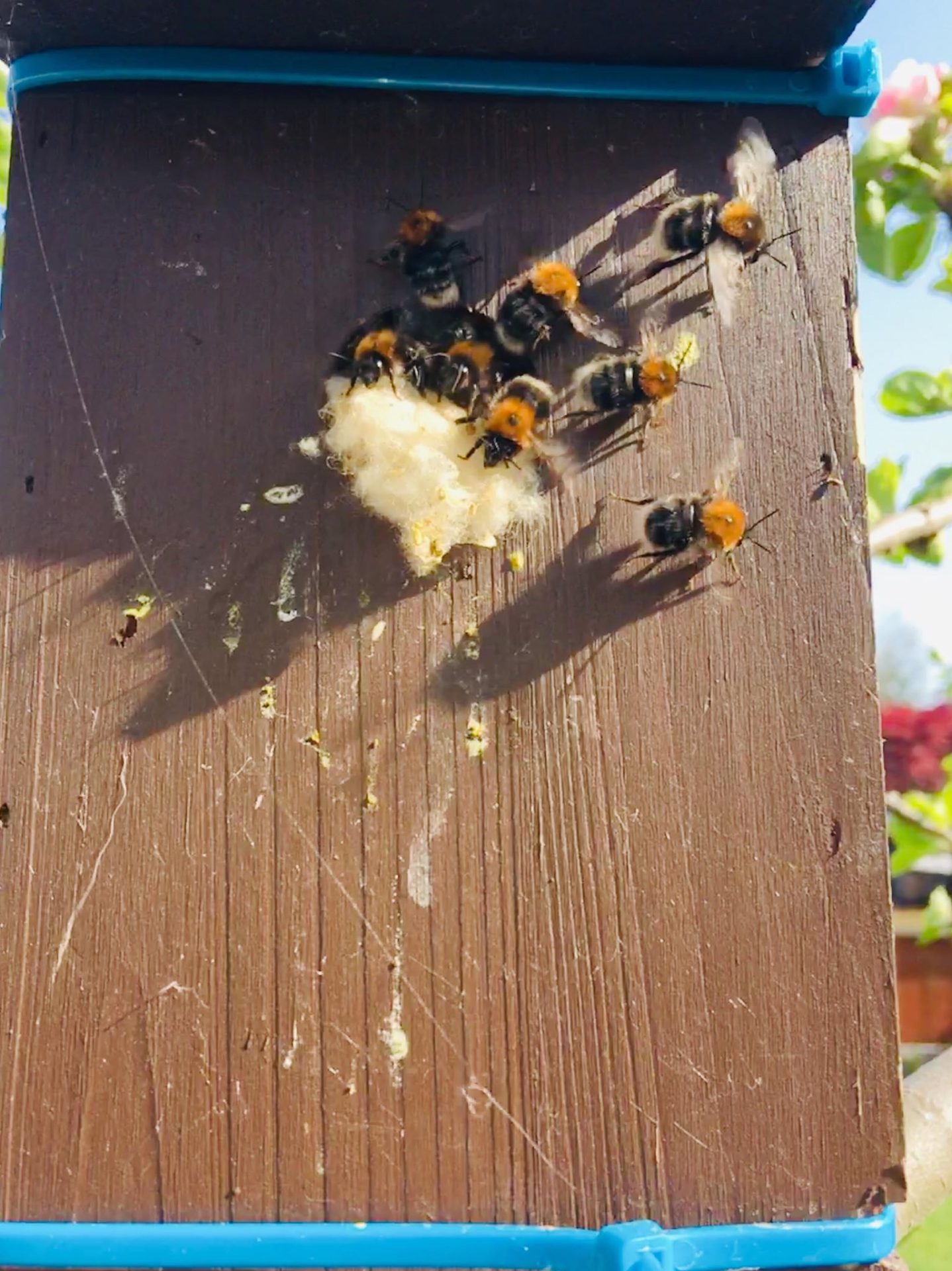
A nest of a hypnotic bumblebee (Bombus hypnorum) in a birdhouse
Photo: Dave Jones
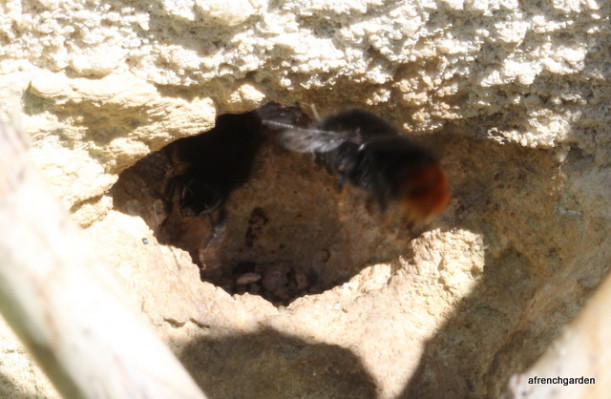
Bumblebees PLUS – Nest of rock bumblebees (Bombus Lapidarius) in the wall
Photo A French Garden
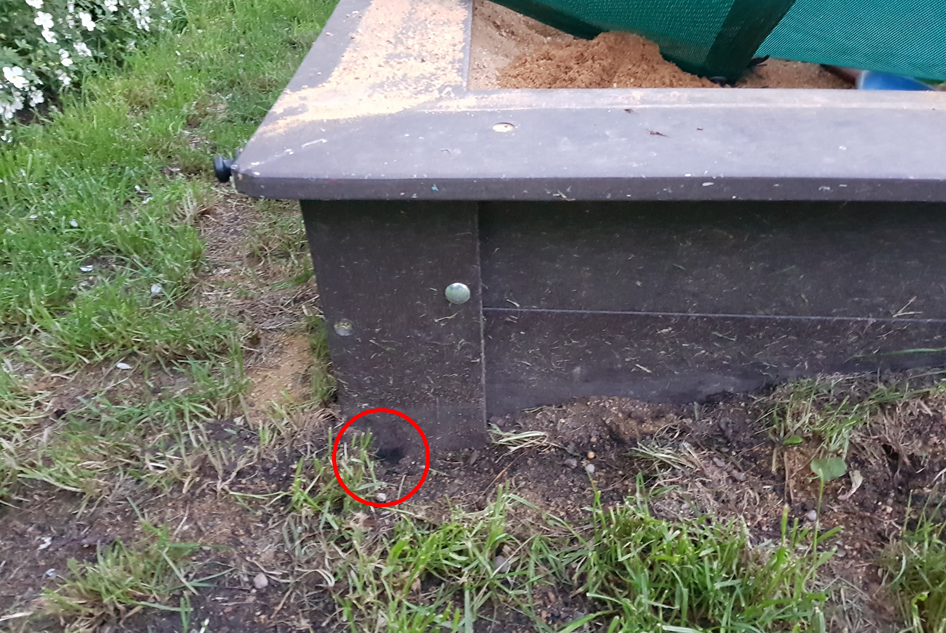
Entrance to the nest of ground bumblebees (Bombus terrestris) in the kindergarten Kněževes near Prague
Photo O. Hercog
A rather unique video by Vítek Cach. He captured an atypical situation where a mother bumblebee (Bombus terrestris) carries dry moss into her nest cavity. Most bumblebee species do not do this.
Exceptions prove the rule – here, bumblebees (Bombus terrestris) have nested in a birdhouse.
How to recognize a mother looking for a nesting place?
You can easily recognize a searching queen mother, especially by her typical search flight low above the ground.
It does not sit on flowers and passes them by without interest. It climbs into holes in the ground, or into various openings and leaves them again. It looks for cavities in them to nest in. It stays in some and examines them, and leaves others immediately.
Mothers actively search for nesting sites during the day in several waves – in the morning, and then later in the afternoon in 1-2 waves. Early evening is especially interesting for them , when the wind calms down and they do not need as much energy for flight.
If it is cold or windy, they are not so active in searching. They are also not very active when they sense changes in the weather and when the conditions for nesting are not suitable (temperature and amount of food).
These are general rules, but you can easily meet a bumblebee mother looking for a nesting site even at noon.
The mother looks for dark areas – holes in the ground, holes in the wall, entrances to birdhouses, cracks in the wall.
It is a very typical flight and cannot be confused with anything else. Even the flight of males who are looking for females to mate with in the advanced season looks different and workers never fly like this. Moreover, neither workers nor males are found in nature in the spring. The mother uses this flight only when she is looking for a nesting site.
Interesting fact
- Mothers will only look for them when the weather is nice and when they are not hungry and looking for food – they can't do it on an empty stomach...
- So they very often search in the morning and later in the afternoon, when there is no strong wind and a search flight will not cost them much energy
- Sometimes the winter feeding and searching phases can overlap . The queen mother simply surveys the terrain and gradually returns to interesting locations when the time is right to build a nest .
- The search for a nest can take several weeks . Until the mother finds a place that suits her, she will not nest because she knows it would not be worth it.
- The mother sometimes stops , for example if she gets too cold. If everything is fine otherwise, she will return to searching later.
- If the mother does not find a suitable nesting site in time, or if she loses the nest she has built, she becomes a so-called wanderer .
She will look for a nesting site, but her nest-building instinct will weaken and she will never build a nest again . Such a mother can be repeatedly introduced to the hive by a predator, but she will not settle there.
Please watch the videos that show typical mother searching flights. If you don't see such a flight, there is no point in trying to persuade the mother to settle.
When a mother is looking for a nesting site, does she always start nesting there?
it has to wait to build a nest because it is cold and food is scarce. So it often just looks for suitable places and returns there when the time is right.
That's why you might find that you offer a scare to such a mother and she won't accept it - she simply doesn't want to yet and you won't convince her.
The mother will try to become a bug , she will also sometimes carry out a search flight, but she will not nest. Sometimes such bugs search for and attack the nests of other mothers of their species - they try to take over the nest.
We explain this by saying that a mother who has lost her nest no longer has enough energy to start from scratch and therefore takes a risk and tries to take over another nest.
Breeders sometimes take advantage of this effect by offering a nest in a hive to a mother who has lost her mother for some reason.
How to distinguish between a mother who is looking for a nesting site and one who is not?
If the mother is conducting a search flight looking for a nesting site , it is worth offering her a scare.
If the queen mother is feeding on flowers or flying high , she is not looking for a nesting site , or it cannot be determined. But there is certainly no point in offering her a scare - she will not accept it .
If the mother has pollen threads on her back pair of legs, already has her own nest and you must not disturb her . She would never accept an offered nest and if an accident occurred, her abandoned offspring would perish.
What if more mothers meet in a place suitable for nesting?
This unfortunately happens. Here the law of the strongest wins. fight each other and the strongest one wins. It is a life and death fight and often ends in injury and death for both mothers.
It can also happen that a later, stronger species wants to move into a cavity occupied by an early species of bumblebee. The coexistence of two or more queens in one hive , but only temporarily. Even there, a fight eventually occurred.
When breeding bumblebees, this can be prevented by the breeder getting the resident queen used to passing through the flap (lowered flap) in good time, and the late arrival will not be able to enter the cavity.
Mothers of most species reliably return to the site of their natal nest (if they survive hibernation). The sisters then fight for the nesting site among themselves.
The fight is fierce - the mothers fight for the cavity that was suitable and the bumblebees have completed their cycle there, so they will try again.
You can read about solving the situation when queens return to the hive - Queens' Returns to the Hive - the Birth Nesting Site.
Interesting fact
- Sometimes a beekeeper is surprised to find one queen with a nest and the other dead in the hive. Apparently there was a fight
- Unfortunately, mothers can injure each other during a fight and both die.
- In nature, you can find a place where there are several dead mothers and only one successfully nesting (observation by J. Čížek)
Do mothers need help in the spring – when and what kind?
Queen bees are prepared for the challenges of spring – temperature changes, rainfall and food shortages. But sometimes you find an exhausted queen in the wild and wonder if and how to help her.
Helping Bumblebees in Spring will help you make decisions and take action.